Best Patch Material for Rucksacks and Backpacks
Choosing a patch for a rucksack isn't just about looks. It's about whether it will survive the school run, the daily commute, or a proper hike up a hill in the rain or not. So, the best strategy is to get the material right, and the patch will outlast the bag itself.
If you're after a quick answer: PVC patches and embroidered patches are the two best options for rucksacks. PVC copes best with wet British weather and rough daily use, and embroidered patches suit a softer, more classic look for canvas or everyday bags. Which one is right depends entirely on how the rucksack gets used.
Start Yourself by Asking How the Bag Actually Gets Used
Before picking a material, this question helps you to think about the bag's daily life rather than jumping straight to patch types.
Is it a school rucksack that gets chucked around, dropped on wet pavements, and left out in the rain more than anyone would like to admit?
Is it a hiking or walking bag that needs to survive proper outdoor conditions, mud, drizzle, and the odd downpour that shows up out of nowhere?
Is it more of a lifestyle bag, a canvas tote or denim-style rucksack you carry into town or on the train?
The rougher and wetter the bag's life, the more a patch needs to be tough rather than pretty.
Why PVC Patches Suit Rucksacks Used Outdoors
PVC is a flexible, rubber-like material that shrugs off water almost completely. Given how often the UK sees rain, this matters more here than it might in a drier climate. The colour is moulded into the material itself, so it won't fade or wash out, and mud or dirt wipes straight off with a damp cloth.
This makes PVC the sensible choice for school bags, hiking rucksacks, cycling bags, and anything that spends real time outdoors.
Why Embroidered Patches Suit Everyday and Canvas Bags
Embroidered patches are stitched rather than moulded, which gives them a soft, textured finish that looks a bit more traditional, almost like a badge you'd earn on a scouting trip or pick up on your travels.
They work particularly well on canvas rucksacks, denim-style bags, and anything that isn't dealing with heavy weather day to day. If you want a patch that feels personal or a bit nostalgic, embroidery usually wins over PVC on looks alone.
A Straightforward Comparison Between PVC And Embroidered
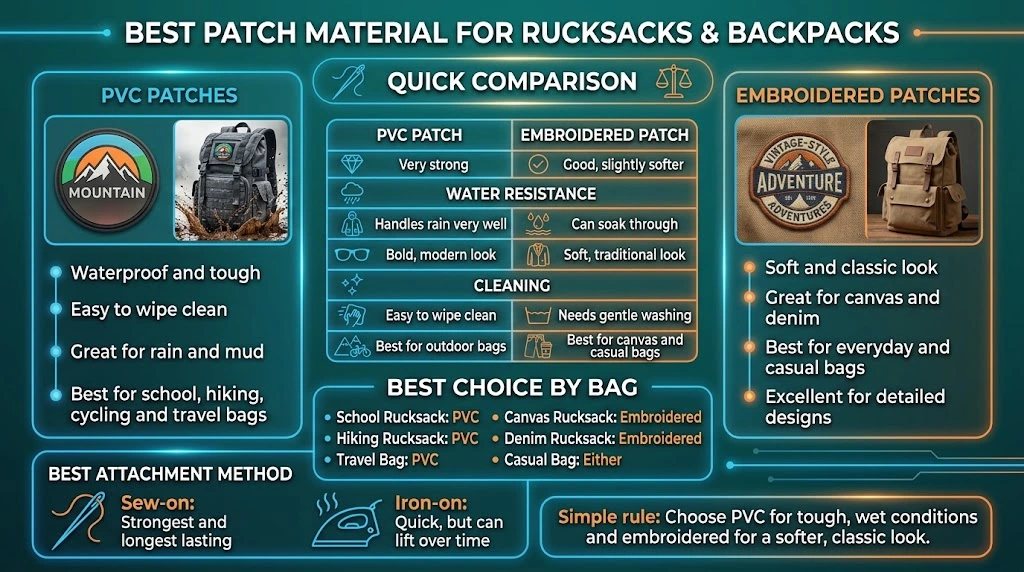
| Handles rain: Very well | Handles rain: Can soak through |
| Toughness: Very strong | Toughness: Good, slightly softer |
| Look: Bold, modern | Look: Soft, traditional |
| Cleaning: Wipe clean | Cleaning: Needs a gentle wash |
| Best suited to: Hiking, school, outdoor bags | Best suited to: Canvas, denim, casual bags |
| Fine detail: Good | Fine detail: Excellent |
Getting the Size Right
Rucksack patches work best when they're kept modest rather than oversized.
A front pocket patch usually sits somewhere between 5cm and 8cm across.
A side patch tends to work best around 5cm wide.
Larger back panel patches, closer to 15cm or more, are less common but can work well on bigger hiking packs with a wide flat panel to work with.
Going too large tends to make a bag look cluttered rather than smart, particularly on smaller school-size bags.
Sewn On or Ironed On?
There are two main ways to attach a patch, and the choice matters more for rucksacks than for most other items, simply because bags get thrown about so much.
Sewing gives the strongest, longest-lasting result. It holds up through daily knocks, being tossed into lockers, or bounced around in a car boot.
Ironing on is quicker, but rucksack fabric flexes constantly, and heat-applied patches are more likely to lift at the corners over time, especially once they've been rained on a few times.
For a bag that's used daily, sewing is almost always worth the extra effort.
Keeping a Patch From Peeling Off
A few simple habits go a long way toward making a patch last.
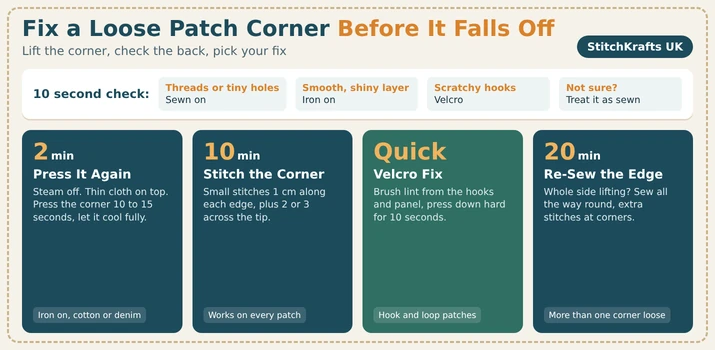
Sew it on rather than relying purely on iron-on adhesive. Keep it away from tumble dryers if it was heat-applied, since high heat tends to loosen the bond. Add a discreet line of stitching around the edge even on an iron-on patch, which barely takes any extra time. Check on it every so often, and if a corner starts lifting, stitch it back down straight away rather than waiting for it to come off entirely.
Matching the Material to the Bag Type
School rucksacks generally do best with PVC, given how much daily wear and rough handling they take on.
Hiking and walking rucksacks should stick with PVC, since they need to cope with genuinely wet, muddy conditions.
Commuter and travel bags also suit PVC well, mainly because of how much handling they go through on trains, buses, and airports.
Canvas rucksacks look best with embroidered patches, since the stitched texture sits naturally against the fabric.
Denim-style rucksacks pair nicely with embroidered patches too, for the same reason.
Everyday casual bags can really go either way, depending on whether you're after a bold look or a softer, more classic one.
Common Questions
Can a PVC patch be sewn on, or does it only stick with heat?
It can be sewn. Most PVC patches come with small pre-punched holes around the edge made specifically for stitching.
Will an embroidered patch survive typical British weather?
It'll cope with the odd shower fine and dry out without issue. For a bag that's regularly out in heavy rain, PVC is the more reliable option.
Which is better for a child's school rucksack?
PVC tends to hold up better, mainly because it copes with rough play, drops, and the occasional puddle far better than embroidery does.
Does the type of rucksack fabric matter?
Most patches attach fine to canvas, nylon, and denim. Thicker or more textured fabric can make sewing slightly trickier, though it's still very doable.
How long should a good rucksack patch last?
A properly sewn patch, whether PVC or embroidered, should easily last several years even with regular daily use.
Fancy a Custom Patch for Your Rucksack?
StitchKrafts UK can create both PVC and embroidered patches to suit any rucksack or backpack, whether you need something rugged for the outdoors or something a little softer for a canvas or denim bag.