How to Wash Clothes With Iron-On Patches Without Ruining Them
Quick answer: Turn your clothes inside out. Wash them in cold water. Use a gentle setting. Try not to put them in the tumble dryer. Heat is what makes a patch fall off. Not the washing itself.
Let's clear up a few things people get wrong, then go through the easy steps.
Myth: "Iron-On Patches Just Fall Off Eventually, There's Nothing You Can Do"
This is not true at all. A good patch, put on the right way, can last for years and years of washing.
So why do some patches fall off fast? It is usually one of two things. Either the patch was not made very well to begin with, or it was washed in a way that was too rough for it. Durable iron on patches are made with strong glue and a sturdy backing. They can handle normal washing just fine. Cheap, thin patches are the ones that usually fall apart first.
Myth: "Hot Water Cleans Clothes Better, So It Is Fine to Use"
Hot water might be good for getting out tough stains. But it is one of the worst things for an iron-on patch.
Heat makes the glue soft again. Once the glue is soft, water can sneak underneath it. This makes the patch weak and loose.
Cold water keeps the glue strong and steady. It also stops your clothes from shrinking. Shrinking fabric can pull at the edges of a patch too, even if the patch itself is totally fine.
Myth: "The Washing Machine Is the Part That Ruins Patches"
Actually, it is often the dryer that causes more damage, not the washing machine. Dryers get much hotter than a wash cycle, and they stay hot for a long time.
Letting clothes air dry is the safest choice. If you really need to use a dryer, pick the lowest heat setting. Try taking the clothes out a little early, while they are still a bit damp.
So What Should You Actually Do?
Now that we have cleared up the myths, here is the simple plan.
Turn your clothes inside out before washing. This keeps the patch facing away from zippers, buttons, and other clothes rubbing against it.
Pick a cold, gentle wash setting instead of a strong or heavy one. Less shaking around means less stress on the patch.
Stay away from strong soap and bleach near the patch. These can break down the glue faster than plain water and mild soap would.
Let clothes air dry whenever you can. If you must use a dryer, keep the heat as low as possible.
What if It Is a Patch You Made Yourself?
A lot of people spend real time designing custom patches. Maybe it is for a school group, a team, or just something they personalise themselves and really love. These patches are worth extra care, since they are harder to replace than a regular store bought one.
A gentle wash and air drying protects all that hard work, instead of tossing it into a hot wash and hoping for the best.
What About Patches Made With Thread Instead of Glue?
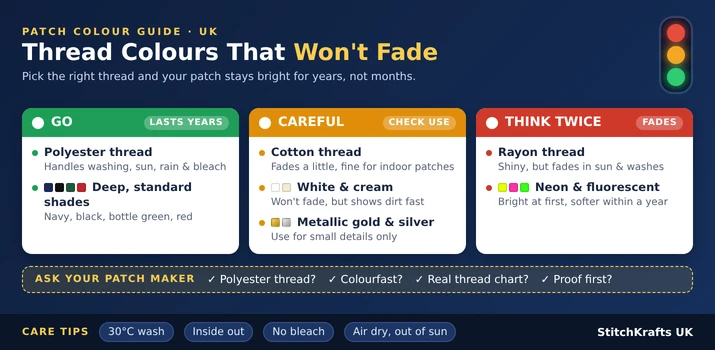
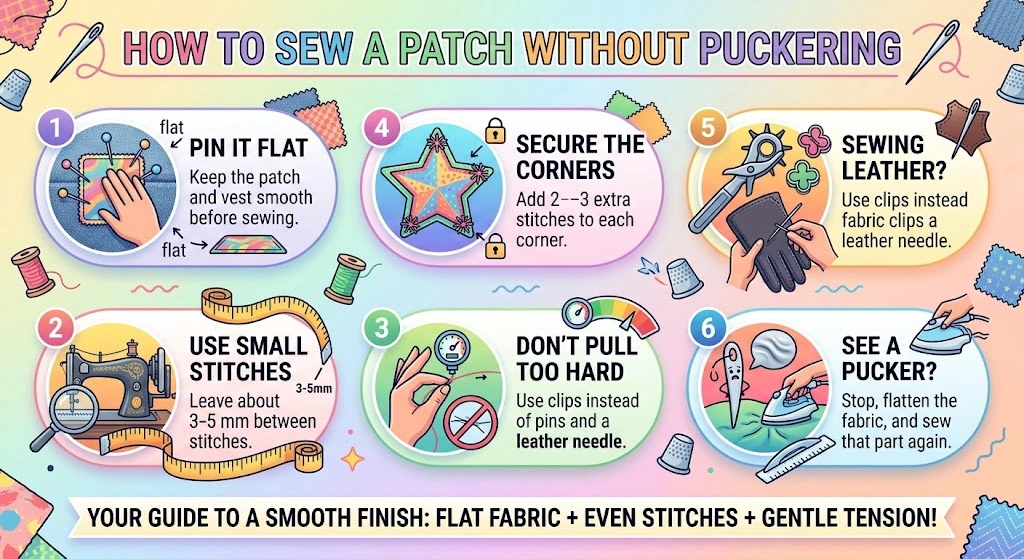
Not every patch uses glue. Some are sewn on with thread instead. These are called embroidered patches.
To clean embroidered patches, you need to protect the thread, not glue, since there is no glue holding these on at all.
Do not twist or wring the fabric near the patch. This can loosen the threads. If you spot a loose thread, snip it carefully instead of pulling it, since pulling can undo even more of the stitching.
How Can You Tell a Patch Is About to Fall Off?
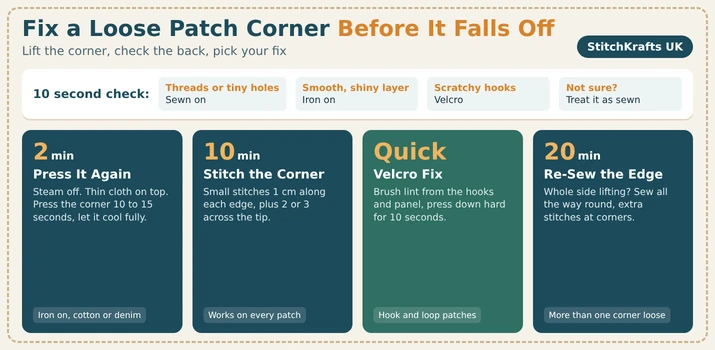
A patch usually gives you warning signs before it falls off completely. Watch for a corner that lifts up slightly. A little bit of glue peeking out at the edge. Or the patch moving a tiny bit after a wash.
If you catch it early, it is an easy fix. Just place a cloth over the patch and press a warm iron on it, the same way you did when you first put it on. Let it cool all the way down before wearing or washing it again.
If you wait too long, the patch might need to be sewn back on instead of ironed.
Easy Tips Based on What You Are Washing
Jackets and hoodies are usually thick and tough. A cold, gentle wash with air drying works really well for these.
Bags and backpacks are better cleaned by hand in just the one spot, rather than tossed in the whole washing machine.
T-shirts and thin fabric need the most care. Thin fabric moves and stretches more, which pulls harder on the edges of a patch.
Frequently Asked Questions
Can I fix a patch that is starting to peel off?
Yes! Put a cloth over the patch, then press a warm iron on it for a little while. Let it cool down completely before you wear it or wash it again.
Is washing by hand safer than using a machine?
Washing by hand is gentler, especially for embroidered patches. But a cold, gentle machine wash works fine for most iron-on patches too.
Do custom patches need extra special care?
Not really. What matters most is how well the patch was made, not where you got it from.
How many washes can a good patch survive?
A well-made patch can survive dozens and dozens of washes. Cold water and gentle drying help it last even longer.
Can glue help fix a patch that feels loose?
Yes. A little bit of fabric glue around the edges can help hold it in place, especially in spots that move around a lot.
Need a Strong Patch That Can Handle Lots of Washing?
If you are in London, Manchester, or anywhere else across the UK, StitchKrafts UK makes durable iron on patches built to last through wash after wash. We can help you personalise a jacket or customise a batch of patches for your team or club, made to survive more than just the first wash.