How to Remove Iron-On Patches Without Damaging Clothes
Whether your patch is peeling, faded, or simply no longer wanted, you can safely remove it without ruining your clothes. The process is simple and usually takes less than 10 minutes.
Quick Answer
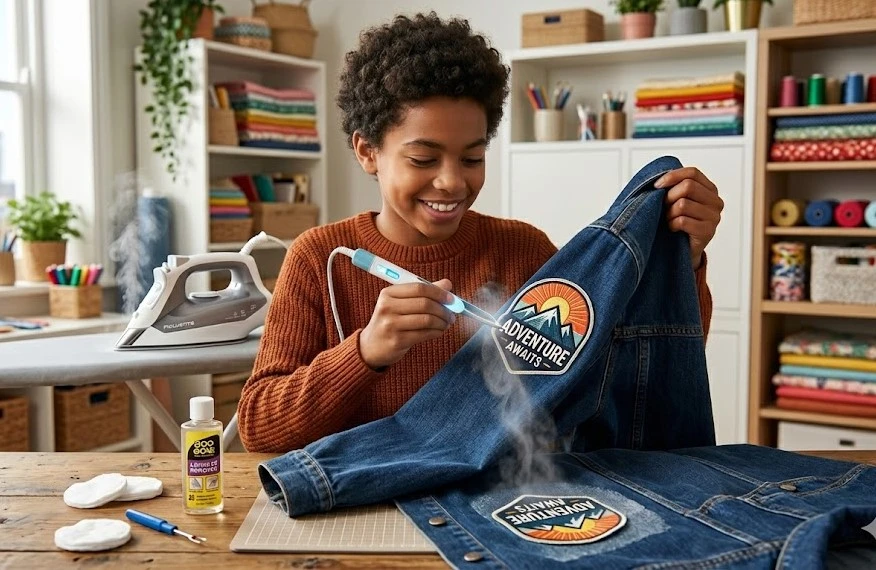
To remove an iron-on patch, place a thin cloth over the patch and press a warm iron on top for 20 to 30 seconds. You can also use a hair dryer. Once the adhesive softens, slowly lift one corner with tweezers and peel the patch away carefully. Clean any leftover glue with warm, soapy water or a fabric-safe adhesive remover, then wash the garment normally.
Why People Remove Iron-On Patches
People remove patches for many reasons, including:
- Peeling or lifting edges
- Faded colours
- Wrong placement
- Updating old clothing or backpacks
- Replacing old designs with new ones
- Moving patches to another item
No matter the reason, the same removal process works for most fabrics.
What You Need
Most items are already available at home:
- Iron or hair dryer
- Thin cloth or towel
- Tweezers
- Butter knife or plastic card
- Warm water
- Mild dish soap
A hair dryer is often safer for delicate fabrics because it gives better heat control and lowers the risk of damage.
Step-by-Step Guide to Remove Iron-On Patches
Step 1
Heat the Adhesive
Place a thin cloth over the patch to protect the fabric. Use a warm iron for 20 to 30 seconds. If using a hair dryer, hold it a few centimetres away and move it in slow circles for about 30 to 45 seconds.
Avoid very high heat because it can damage synthetic or waterproof fabrics.
Step 2
Peel the Patch Slowly
While the adhesive is warm, gently lift one corner using tweezers or a butter knife. Peel slowly at a low angle, similar to removing a sticker.
If the patch feels stuck, stop and apply more heat before continuing. Pulling too hard can tear fabric fibres.
Step 3
Remove Leftover Glue
After removing the patch, some sticky residue may remain. Rub the area gently with warm, soapy water and a cloth.
For stubborn glue, use a fabric-safe adhesive remover. Denim and canvas usually clean up easily after washing.
Step 4
Wash the Garment
Wash the clothing according to the care label to remove remaining adhesive and restore the fabric texture.
For delicate materials like silk or fine knits, hand-wash in cool water rather than a washing machine.
How to Remove Iron-On Patches From Backpacks
Backpacks need extra care because they are often made from nylon or polyester.
Follow these extra tips:
- Use a hair dryer instead of an iron
- Keep the dryer moving constantly
- Peel slowly and gently
- Fill the backpack with a towel to keep the surface flat
This helps avoid melting or stretching the material.
Fabrics That Need Extra Care
Not all fabrics handle heat the same way.
Safer fabrics:
- Denim
- Cotton
- Canvas
Fabrics that need caution:
- Polyester blends
- Nylon
- Waterproof materials
- Leather
- Silk
For delicate materials, always use lower heat and test in a hidden area first.
Common Mistakes That Damage Clothes
Avoid these common mistakes:
- Ironing directly on the patch without a cloth barrier
- Using maximum heat
- Pulling the patch off while cold
- Scraping too hard
- Ignoring the clothing care label
- Holding heat in one spot too long
- Using harsh solvents like nail polish remover
Can You Reuse an Iron-On Patch?
Yes, many patches can be reused if removed carefully.
You can:
- Apply new iron-on adhesive backing from a craft store
- Sew the patch onto another item
Sewing usually gives a stronger and more permanent hold than adhesive alone, and is the preferred method for workwear and uniforms.
If the patch itself is peeling, cracking, or losing threads, replace it rather than reapplying.
Will Iron-On Patches Ruin Clothes?
Iron-on patches usually do not ruin clothes if they are applied and removed correctly.
Damage mainly happens when:
- Too much heat is used
- The patch is pulled off before the glue softens
- Strong chemicals are used on the fabric
Using the correct heat-and-peel method keeps most garments safe in virtually all cases.
What Dissolves Fabric Adhesive?
Warm, soapy water handles light adhesive residue well.
For stronger glue, use:
- Fabric-safe adhesive removers
- Gentle adhesive cleaning products made specifically for clothing
Avoid strong chemicals like:
- Acetone
- Nail polish remover
- Paint thinner
- WD-40
These can discolour or permanently damage fabric, even when used carefully.
Is There a Solvent That Removes Iron-On Patches?
Yes. Fabric-safe adhesive removers are designed specifically to break down the thermoplastic glue used in iron-on patches.
They work best on stubborn residue left after the patch has already been peeled away. Always test the product on a hidden area of the garment before applying it to the main surface.
Frequently Asked Questions
What is the safest way to remove an iron-on patch?
Place a thin cloth over the patch, apply warm heat for 20 to 30 seconds using an iron or hair dryer, then slowly peel from one corner using tweezers. Reheat as needed instead of forcing the patch off. This method is safe across virtually all fabric types.
How do I remove an iron-on patch without an iron?
A hair dryer works very well, especially for backpacks and delicate fabrics. Use medium heat and move it in slow circles for 30 to 45 seconds until the glue softens enough to peel.
How do I remove sticky glue after removing a patch?
Use warm, soapy water and gently rub the area with a cloth. For tougher residue, apply a fabric-safe adhesive remover. Avoid acetone, nail polish remover, or WD-40 as these can permanently stain fabric.
Can I remove patches from nylon or waterproof bags?
Yes, but only use a hair dryer on medium heat, no iron. Keep the dryer moving constantly, stuff the bag with a towel to keep the surface flat, and peel carefully to avoid stretching or melting the material.
Will iron-on patches ruin clothes?
Not if removed correctly. Damage happens when too much heat is used, the patch is pulled off before the glue softens, or strong chemicals are applied. The proper heat-and-peel method keeps most garments safe.
What dissolves fabric adhesive?
Warm, soapy water handles light residue. For stronger glue, use a fabric-safe adhesive remover designed for clothing. Avoid acetone, nail polish remover, paint thinner, and WD-40; these can permanently discolour or damage fabric.
Is there a solvent that removes iron-on patches?
Yes. Fabric-safe adhesive removers are formulated to break down the glue used in iron-on patches. Always test on a hidden area before applying to the full garment.
Can you reuse an iron-on patch after removing it?
Often yes, if the embroidery is still intact. The original adhesive may be spent, but you can apply new iron-on adhesive backing from a craft store, or simply sew the patch on for a stronger, permanent hold.
Final Tip
The biggest mistake people make is pulling the patch before the adhesive fully softens.
Always:
- Give the heat time to work
- Reheat between peels when needed
- Peel slowly and steadily at a low angle
This keeps your clothes looking clean and undamaged, no matter the fabric, patch type, or how long it's been on.