The Unwritten Biker Patches Rules & Etiquette (Avoid Costly Mistakes!)
Biker patches carry more weight than almost any other patch you can sew on a jacket. A rocker, a centre logo or a small diamond on the chest can say who you ride with, where you ride and what you have earned. Get it wrong and you are not just making a fashion mistake. You can offend a club, end up in an awkward conversation at a servo, or in some Australian states, break the law.
This guide covers both sides. The unwritten etiquette that riders pick up over years, and the written laws that now apply in parts of Australia. It is written for new riders, social riding groups and anyone designing a vest or jacket for the first time.
Quick Answer
If you are not a patched member of a club, do not wear a three-piece patch, a territory rocker, an MC tab or a 1% diamond. Stick to personal patches, riding group patches without club structure, event patches and memorial patches. In Western Australia and Victoria, publicly displaying the insignia of listed clubs is a criminal offence, and other states restrict colours in pubs and licensed venues. Keep your design clearly personal and you will stay on the right side of both the culture and the law.
Why Patches Matter So Much in Biker Culture
To a club member, a patch is not decoration. It is something given, not bought. Many clubs make a new member wait months or years as a prospect before the full set of colours is handed over, and those colours usually stay the property of the club. That is why wearing a lookalike design, even as a joke, lands badly. It suggests you have claimed something other people worked for.
Patches on a vest typically tell you four things:
- Which club or group the rider belongs to
- Where that chapter is based
- The rider's role or rank, such as president or road captain
- Rides, rallies and milestones the rider has completed
The Three-Piece Patch Explained
The three-piece patch is the most recognised layout on any vest, and the most sensitive. It is made of:
- Top rocker with the club name, curved across the shoulders
- Centre patch with the club logo
- Bottom rocker with the territory, such as a city or state
Often there is also a small rectangular MC tab next to the centre patch. In Australia, this full layout is understood as a claim of membership in an established motorcycle club. A two-piece layout (top rocker and centre) or a single centre patch is far more common for social riding groups, charity rides and riding associations, because it does not signal that structure.
Rule of thumb: if you are not a member, do not build a three-piece layout on your back, even with your own made-up name on it.
The Unwritten Rules Most Riders Follow
1. Never copy or adapt a real club logo
Changing a colour or swapping a word does not make a club design yours. If it looks like it belongs to a club, people will read it that way. Start from a blank page.
2. Leave territory rockers alone
A bottom rocker that says "Victoria", "NSW" or a city name implies you hold that ground. Clubs take this seriously. If you want to show where you are from, put it in a small round patch or on the front of the vest instead.
3. Skip the MC tab and the 1% diamond
The MC tab marks a motorcycle club, and the 1% diamond is linked to outlaw clubs. Neither is a style choice. Social groups often use "RC" (riding club) wording, or nothing at all.
4. Do not touch another rider's colours
Do not grab, pull or lean on someone's vest, and never ask to try one on. If you are curious, ask a question politely and accept the answer.
5. Treat a memorial patch with respect
Memorial patches honour a rider who has died. They are personal and should not be traded, mocked or worn by people who did not know the person.
6. Earned patches are earned
Mileage patches, rally patches and run patches are worn by riders who did the ride. Wearing one you did not earn is the quickest way to lose respect at a bike night.
The Written Rules: Colours Laws in Australia
This is the part that changes things for Australian riders. Several states have laws about displaying outlaw motorcycle club insignia. The details differ by state and change over time, so treat this as a general overview, not legal advice.
- Western Australia: The Criminal Law (Unlawful Consorting and Prohibited Insignia) Act 2021 bans the public display of insignia from listed organisations. WA's rules are among the broadest in the country because they apply in public places generally, not just pubs and clubs.
- Victoria: Laws passed in 2024 made it an offence to publicly display the insignia of prescribed criminal organisations, including logos, membership marks and the 1% symbol in some circumstances. The ban began in 2025. Penalties for individuals run to more than $11,000, and police can direct people to remove items and seize them.
- Queensland: Summary offences laws restrict wearing or carrying prohibited items linked to identified organisations in public places, and liquor laws restrict them in licensed venues.
- New South Wales, South Australia and the Northern Territory: Restrictions mainly apply in licensed venues, so you can be refused entry to a pub or club while wearing colours.
- Tasmania: Prohibited insignia laws introduced in 2018 restrict displaying certain insignia in specified places.
What this means for you: a personal patch with your own name and artwork is not affected. A design that looks like a listed club's insignia could be. That is one more reason never to copy a club design. If you are unsure about a design, check your state's legislation or ask a local legal service before you wear it.
What You Can Wear Freely
There is plenty of room to make a great vest without stepping on anyone's toes.
- Personal name or nickname tags on the chest
- Original artwork that is clearly yours, such as your bike, a skull you designed, or something tied to a hobby
- Riding group patches for social clubs, charity rides and owner groups, using a single centre patch or two-piece layout
- Event patches from rallies, toy runs and charity rides you attended
- Flag patches such as an Australian or state flag
- Memorial patches for a mate you rode with
Where Patches Usually Go on a Vest
- Back: the main design. For non-club riders, one large centre patch works best.
- Left chest: name tag and small personal patches.
- Right chest: flags, event patches and smaller pieces.
- Front lower panels: rally and mileage patches as you collect them.
If you are sewing onto leather, see our guide on how to attach a patch to a leather jacket, or for denim and canvas, how to sew a patch on a vest.
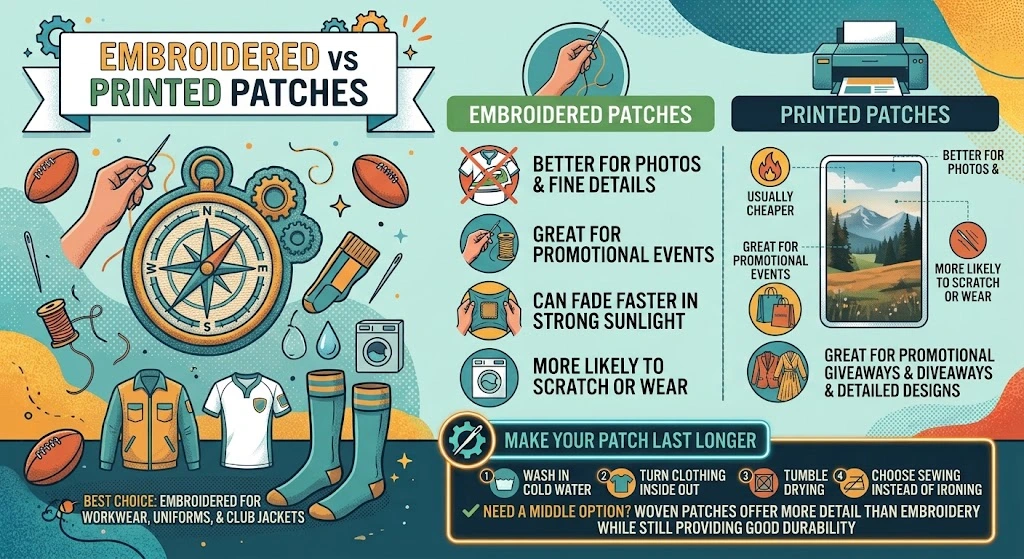
Picking the Right Patch Material for a Riding Vest
A vest takes sun, rain, road grime and constant flexing on the bike, so material matters.
- Embroidered patches: the classic choice for back patches. Bold lines and solid colours read well from a distance.
- Leather patches: suit leather vests and give a rugged, debossed look for name tags and small logos.
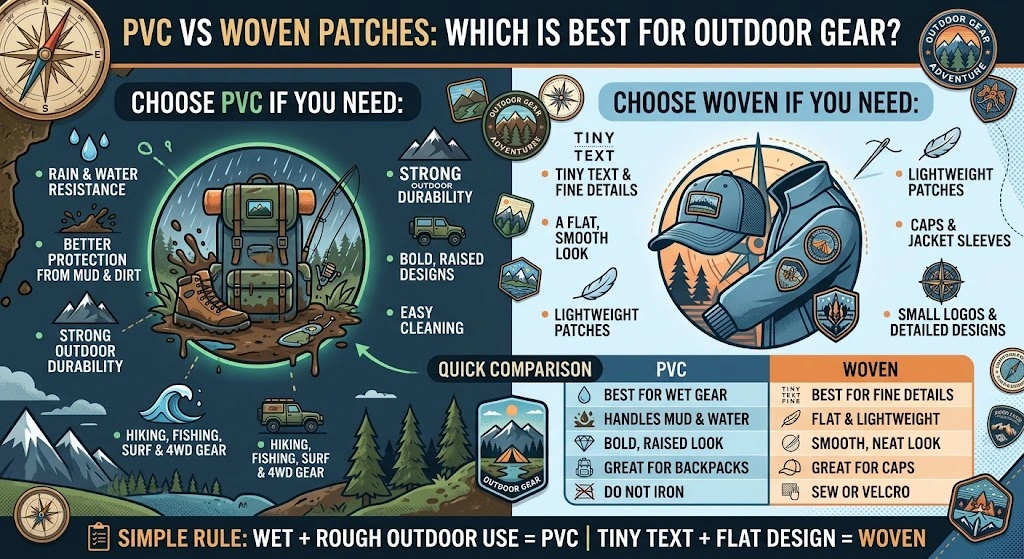
- PVC patches: waterproof and UV resistant, good for riders who are out in all weather.
- Woven patches: better for small text and fine detail, like event dates.
For anything sewn onto a vest, choose a sew-on backing with a merrowed border. Iron-on glue does not hold on leather, and heat can damage it.
Common Mistakes New Riders Make
- Ordering a top rocker and bottom rocker "because it looks good"
- Adding a state name to the bottom of a back patch
- Using MC in the group name without understanding what it implies
- Buying a lookalike club patch online
- Wearing someone else's earned or memorial patch
- Wearing a vest into a licensed venue without checking its dress rules
Frequently Asked Questions
Can I wear a three-piece patch if I am not in a club?
You should not. In Australia, a three-piece layout signals membership of an established motorcycle club. Use a single centre patch or a two-piece layout for a personal or social group vest.
Are biker patches illegal in Australia?
No. Personal, event and riding group patches are legal. What some states ban is the public display of insignia belonging to listed criminal organisations, with Western Australia and Victoria having the broadest rules.
What does the 1% patch mean?
The 1% diamond is associated with outlaw motorcycle clubs. It is not a style choice, and in Victoria it can fall under the insignia ban in some circumstances. Leave it off.
Can a riding group or charity ride have its own patch?
Yes. Many groups do. Keep the design original, avoid territory rockers and the MC tab, and use a centre patch or a two-piece layout.
Can I wear my vest into a pub?
It depends on the venue and the state. Many licensed venues have dress rules about colours, and some states back this with liquor laws. A vest with personal patches is usually fine, but check if you are unsure.
Final Word
The rule that covers almost everything is simple. Make your patches about you, not about a club you are not part of. Original design, no territory rocker, no MC tab, no 1%. Do that and you can build a vest you are proud of, wear it anywhere in Australia, and earn respect rather than trouble.
If you are designing a vest for yourself or your riding group, StitchKrafts Australia makes custom patches in embroidered, leather, PVC and woven styles, with no minimum order. Send us a sketch and we will help you turn it into an original design.