Getting Team Kit Patches Ready Before Autumn Sports Season
Quick answer: Start getting your team's patches ready at least four to six weeks before your first match. Pick the design first, order the patches next, then sew them on. Most clubs run out of time because they wait until the kit arrives before they think about badges. Do it the other way round, and you will be ready on day one.
Autumn is a busy time for clubs. Rugby, football, hockey and netball all start up again at nearly the same time. Everyone suddenly needs badges, and everyone orders at once. Here is how to stay ahead of the rush.
Why Patches Go Wrong at the Start of Season
Most teams follow the same pattern. The kit gets ordered. The kit arrives. Then someone says, "Oh, we still need the club badge on those." By then, the first match is only a week away.
Here is the good news. Patches can be made at the same time as your kit, or even before it. You do not need to wait. Working backwards from your first match date is the trick that saves almost every club.
Your Countdown Plan, Working Backwards From Match Day
Pick your first match date. Now count back from it.
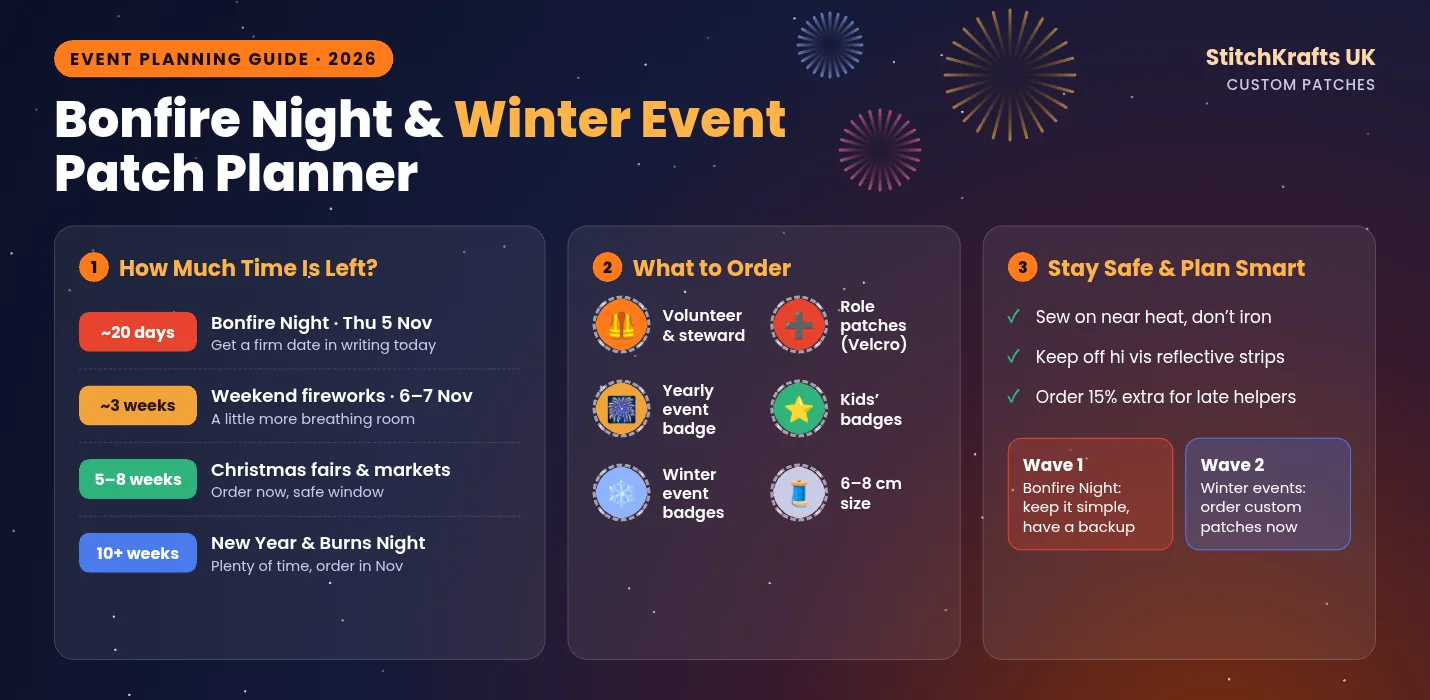
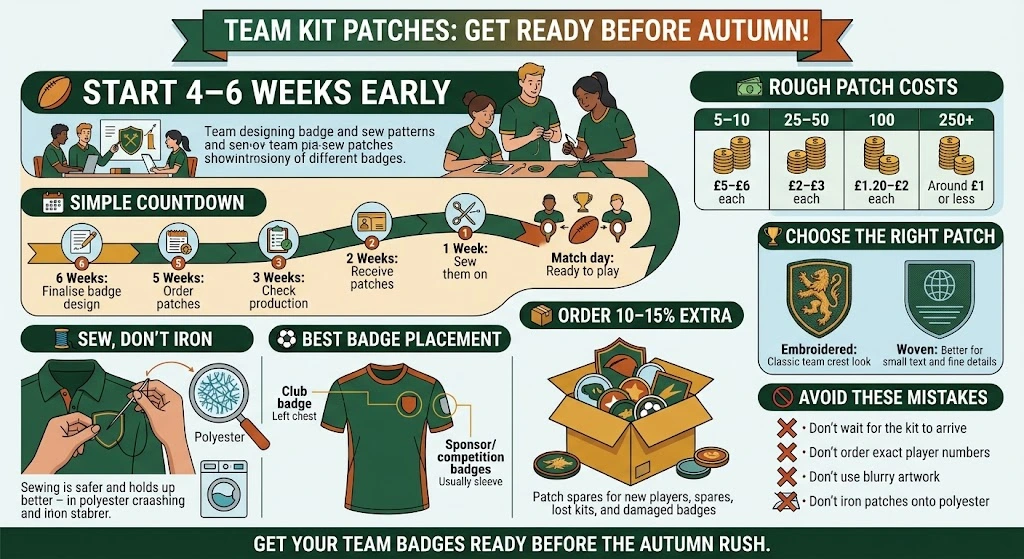
Six weeks before. Decide what your badge looks like. Is it the same as last year, or is it new? Find your best, clearest picture of it. A sharp picture makes everything else faster.
Five weeks before. Decide how many patches you need, and order them. Most patch makers take between one and four weeks to make them, so this is the safe time to place your order.
Three weeks before. Check in with your patch maker. Make sure your order is moving along and that the delivery date still works for you.
Two weeks before. Patches should be arriving. Now sort out who is doing the sewing, and when.
One week before. Sew everything on and wash one test shirt to make sure it all holds up.
Match day. Kit is ready, badges are on, and nobody is panicking.
Kit Takes Longer Than Patches
This is something almost nobody tells you. A full team kit order, with shirts, shorts and printing, often takes three to six weeks from the day you approve the design. Patches usually take less time than that.
This means if you are adding badges to kit you already own, like last year's shirts, the patches are the quick part. You can order them later than you might think. But if you are ordering brand new kit, give yourself the full six weeks and order your patches at the same time, so everything lands together.
What Do Team Patches Cost?
Prices change a lot depending on size, how many you order, and how detailed the badge is. Here is a rough guide from what UK shops are charging right now.
| How Many You Order | Rough Price Per Patch |
| 5 to 10 patches | £5 to £6 each |
| 25 to 50 patches | £2 to £3 each |
| 100 patches | £1.20 to £2 each |
| 250 or more | Often around £1 or less each |
Club badges are usually between 2.5 and 4 inches wide. That size is big enough to see from across a pitch and small enough not to look silly on a chest.
Which Sport Are You Sewing For?
Every sport treats its kit a little differently, so here are some real examples.
Rugby
Rugby shirts take a lot of pulling and tugging, and they get washed after almost every session. Badges need to be sewn on properly, and stitches need to be small and tight.
Football
Football shirts are light and stretchy, so the badge should not be too big or heavy. A medium sized crest on the left chest works well, and anything bigger can pull the fabric down.
Hockey and Netball
Hockey kit is often a skirt or shorts with a stretchy top, so badges go best on the chest or the upper sleeve, away from places that stretch a lot during play.
Junior Teams
Kids grow fast, and kit gets passed down. Sewn on badges can be moved or replaced easily, and you should always order a few spares for new players joining mid season.
Why You Should Not Iron Patches Onto Sports Kit
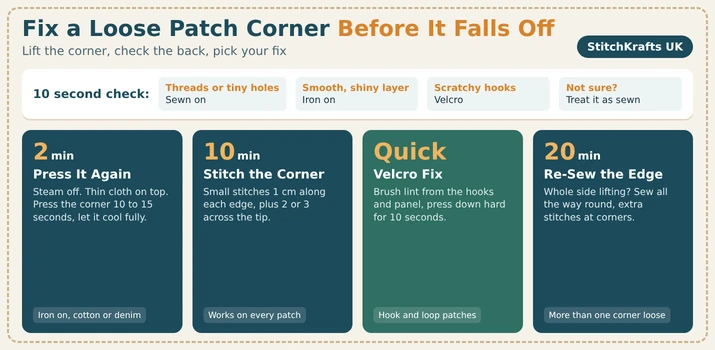
Most team shirts are made from polyester, which is a type of plastic fabric. Heat from an iron can melt it, shrink it, or leave a shiny mark that never comes out.
The safest way to attach a patch to sports kit is by sewing it on. It takes a little more time, but it holds through hard washing, and it will not hurt your shirt.
Where Does the Badge Go?
On most UK team shirts, the club badge sits on the left side of the chest, near the heart. Small extras, like a sponsor logo or a competition badge, usually go on the sleeve.
If your league has rules about where sponsors can sit, check them before you sew anything permanently. Some competitions are stricter about this than you might expect, and unpicking stitches later is a hassle.
Choosing the Right Patch Style
Club badges look best when they are stitched with real thread. That classic raised look is what most people expect from a team crest, and it holds up through lots of washing. Our embroidered patches are a popular choice for exactly this reason.
If your badge has tiny writing, like a club motto or a founding year, a flatter and finer style can show that small text more clearly than thick thread can. Our woven patches are made for this kind of fine detail.
Spares, Reorders and Mid Season Joiners
Teams always grow. New players join, kit gets lost, and shirts get ruined. Here is how to plan for it.
Always order about 10 to 15 percent more patches than your headcount. If you have 20 players, order 22 or 23. The cost of a few extra patches is tiny compared to the cost of a rushed reorder later.
Ask your patch maker to keep your design saved. This way, when you reorder next season, the colours and size will match perfectly, and you will not need to send your picture all over again.
Who Does the Sewing?
This is a real problem for many clubs, because nobody puts their hand up. Here are three simple ways to sort it out.
Ask each family to sew their own child's badge, and send them a short note with the instructions. Run a sewing evening at the clubhouse with a few volunteers and some tea. Or ask your patch maker or a local seamstress about sewing them on for you, which costs a little more but saves a lot of stress.
Common Mistakes Clubs Make
Waiting until the kit arrives before ordering badges is the biggest one. Ordering the exact number of players with no spares is another. Picking a badge picture that is too blurry to stitch clearly causes delays too. And ironing a patch onto polyester kit is a mistake that can ruin a shirt in seconds.
Frequently Asked Questions
How early should a club order team badges before the season?
Four to six weeks before your first match is a safe window. This gives time for design, production and sewing.
Can patches be ordered separately from the kit?
Yes. Ordering patches separately is common, especially if you are adding badges to kit you already own.
Should team badges be sewn or ironed on?
Sewn. Most team kit is polyester, which can melt or mark under an iron, and sewing holds up much better to hard washing.
How many spare patches should a club order?
About 10 to 15 percent more than your player count, to cover new joiners and lost or damaged kit.
Where should the club badge go on a team shirt?
The left chest is the standard spot. Sponsor logos and competition badges usually go on the sleeve.
Can the same badge design be reordered next season?
Yes, if your patch maker keeps your design on file. It is worth asking before your first order.
Ready to Get Your Club's Badges Made?
Whether you are a rugby club in Manchester or a netball team in Birmingham, StitchKrafts UK can help you work out quantities and timings before the season starts. If you would like to see everything we can make for your team, take a look at our full range of custom patches and pick a style that suits your club.