How Do You Get Patch Glue Off From Clothes Fast and Safely?
Quick answer: to remove patch glue easily, you just have to start with gentle heat to loosen it, then use rubbing alcohol or a bit of acetone based nail polish remover on tougher spots, and in the end just wash the fabric normally. Do not try to overdo things.
For More detailed guide, read the steps below.
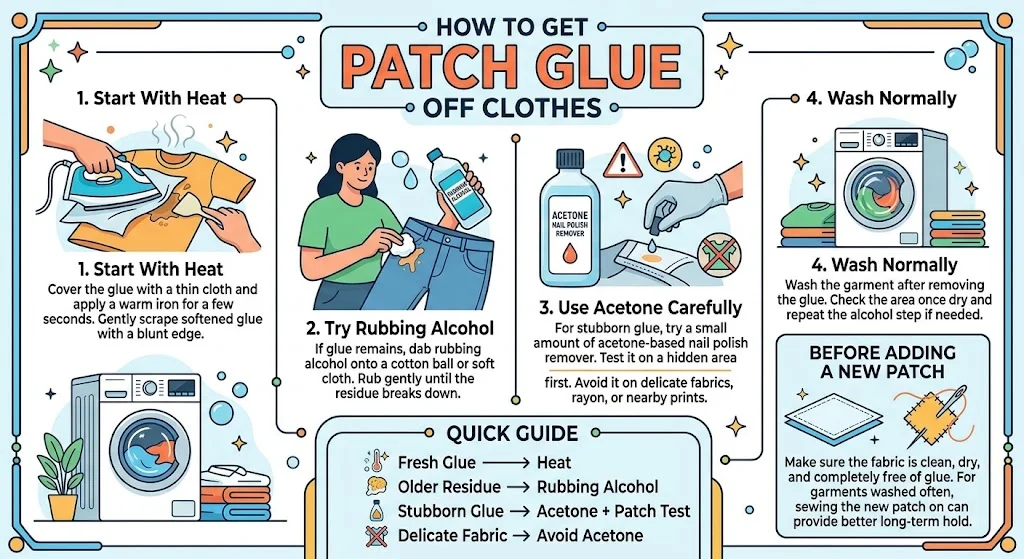
Step 1: Try Heat First
Since iron on patch glue is designed to bond with heat, applying heat again is often the fastest way to loosen it back up.
Place a thin cloth over the glue residue, then run a warm iron over it for a few seconds at a time. Once it's warmed through, try gently scraping the softened glue off with a blunt edge, like an old credit card or a butter knife. Be careful not to use anything sharp enough to tear the fabric.
This step alone solves the problem a lot of the time, especially if the glue hasn't fully cured or aged.
Step 2: Move to Rubbing Alcohol if Heat Isn't Enough
If there's still a residue after the heat method, rubbing alcohol is the next safe step up.
Dab a cotton ball or soft cloth with rubbing alcohol and gently rub the glue spot in small circles. It usually starts breaking down the residue within a minute or two. Keep reapplying a small amount as needed rather than soaking the fabric all at once.
This method works well on most cotton, denim, and polyester blends without causing damage.
Step 3: Use Acetone Only as a Last Resort
For really stubborn glue that won't budge with alcohol, a small amount of acetone based nail polish remover can help. This step needs a bit more caution, since acetone is stronger and can affect certain dyes or synthetic fabrics.
Always test it first on a hidden part of the fabric, like an inside seam, before applying it to the visible area. If the color or texture holds up fine, apply a small amount to a cloth, not directly onto the fabric, and dab at the glue gently until it lifts.
Avoid this step entirely on delicate fabrics, rayon, or anything with a printed design nearby, since acetone can cause fading or damage in those cases.
Step 4: Wash the Fabric as Normal
Once the glue has lifted, wash the garment as you normally would. This clears away any leftover residue from the alcohol or acetone and helps confirm the spot is fully gone before the item goes back into regular use.
Check the area once it's dry. If a faint mark is still visible, repeating step 2 before rewashing usually finishes the job.
What if You're Removing Glue to Replace the Patch?
If the plan is to put a new patch in the same spot, whether it's a fresh embroidered design or something like a leather patch you've ordered separately, make sure the area is completely dry and residue free first.
Any leftover glue or dampness can stop a new iron on patch from bonding properly, which just creates the same problem all over again.
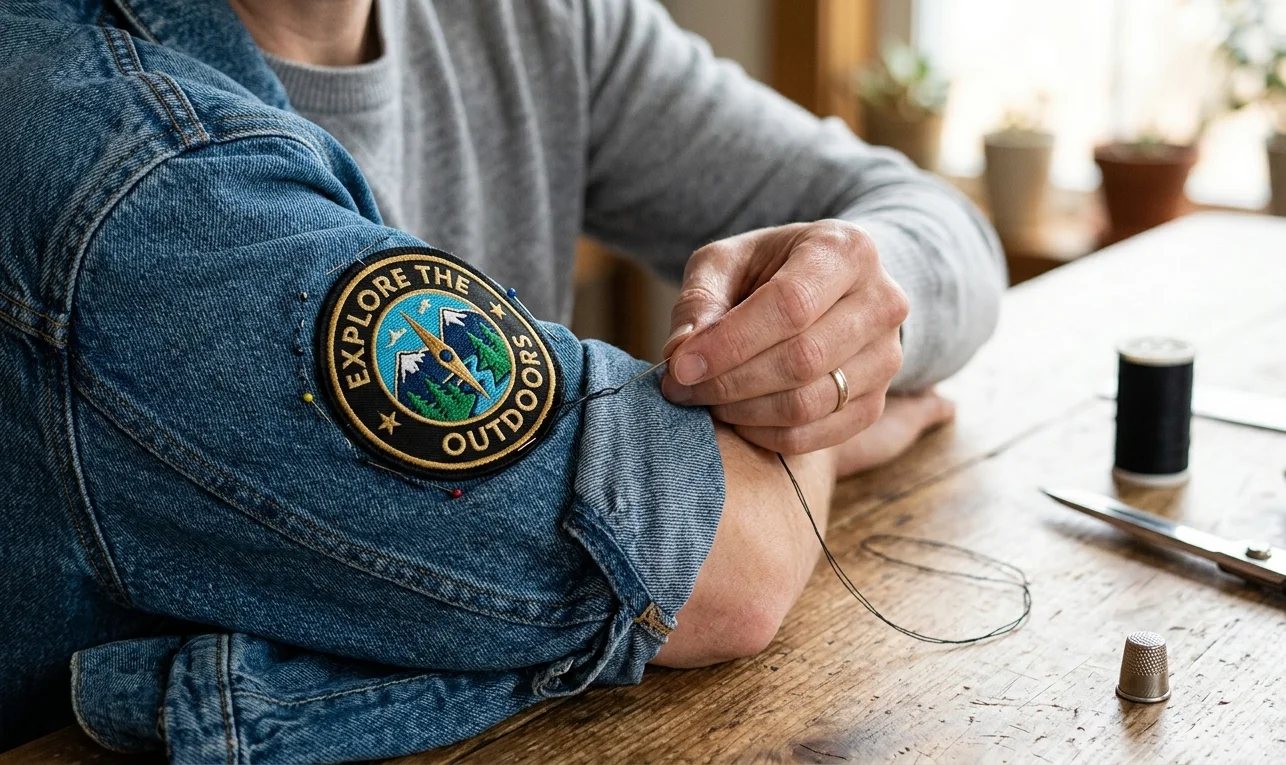
This is also a good moment to reconsider how the new patch gets attached. If the garment gets washed often, sewing the replacement on rather than ironing it tends to hold up far better long term.
Quick Decision Guide
Fresh glue, hasn't fully hardened? Start with heat. This alone often finishes the job.
Older or hardened glue residue? Move to rubbing alcohol after trying heat first.
Really stubborn residue that alcohol won't touch? Try a small amount of acetone, but only after testing on a hidden area first.
Fabric is delicate, rayon, or has a nearby print? Skip acetone altogether and stick to heat and alcohol, going slowly.
Common Mistakes That Make This Harder
Reaching for acetone first instead of trying heat or alcohol.
Scrubbing hard with a rough cloth instead of gently dabbing, which can wear down the fabric.
Skipping the test spot before using acetone on visible fabric.
Not washing the item afterward, which can leave a faint residue behind even after the glue looks gone.
Working through the steps in order, rather than jumping straight to the strongest method, is really the whole trick here.
Frequently Asked Questions
Will rubbing alcohol damage colored fabric?
Generally no, but it's still smart to test a small hidden area first, especially with fabrics that have delicate or hand dyed coloring.
Can I use a hairdryer instead of an iron for the heat step?
Yes, a hairdryer on a high heat setting works as a gentler alternative, though it may take a little longer than an iron to fully soften the glue.
Is it safe to use acetone on denim?
Denim generally holds up well to a small amount of acetone, but it's still worth testing an inside seam first, particularly on darker or treated denim.
What if the glue residue keeps coming back after washing?
This usually means some glue was left behind before washing. Repeat the alcohol step, let it fully dry, then wash again before checking.
Can I put a new patch over old glue residue?
It's best to remove the residue fully first. Leftover glue or moisture can stop a new patch from bonding properly, whether it's iron on or sewn.
Looking for High Quality Patches to Replace the Old One?
Once the glue is gone and the fabric is clean, StitchKrafts USA has you covered with high quality embroidered patches, and you can also order leather patches directly through stitchkrafts.com if you're after something with a bit more texture and durability.
Whether you're in Austin, Chicago, or anywhere else across the US, we can help you find the right patch for a fresh, clean start.