Best Patch Material for Backpacks in Australia
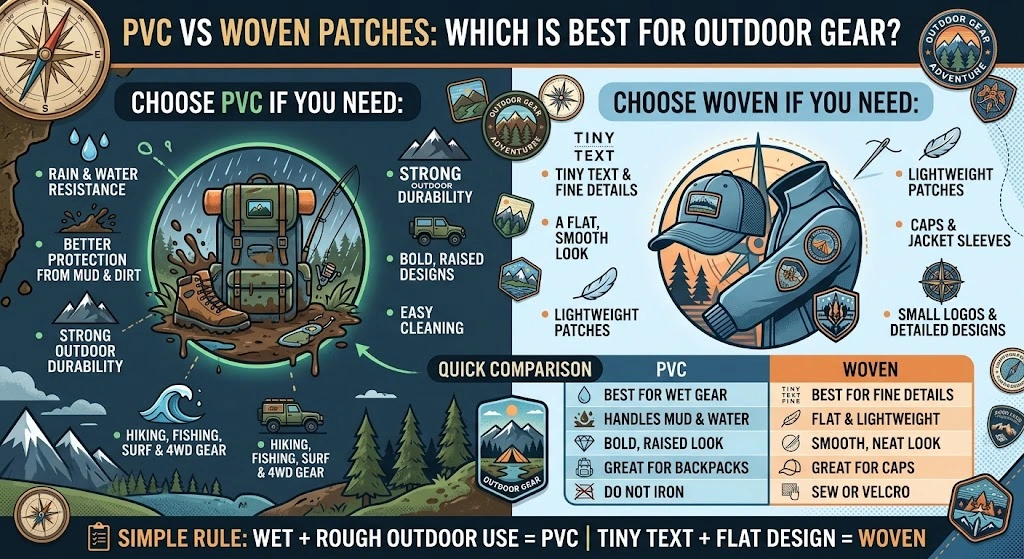
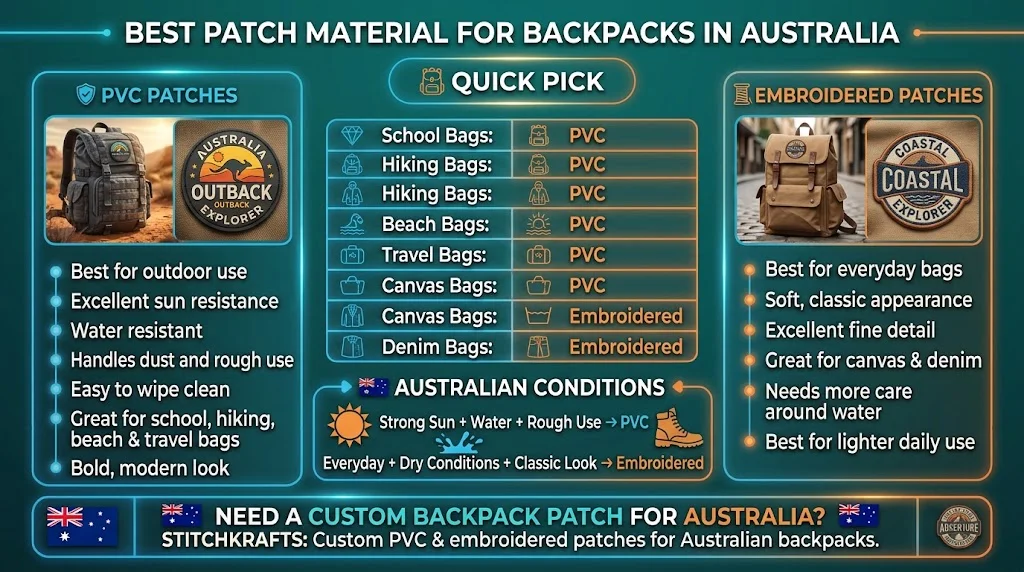
Short answer: PVC patches and embroidered patches are the two best options for backpacks in Australia. The reason is that PVC holds up best against sun, dust, and rough outdoor use, and embroidered patches suit a softer, everyday look for canvas or casual bags. The right pick depends on how hard the backpack actually gets used.
A lot of people assume any patch will do the job, then wonder why it's peeling off or faded within a year. The truth is, Aussie conditions are tougher on gear than most places. Harsh sun, dust, and sudden downpours all take a toll, so the material you pick actually matters here more than people expect.
Myth: "Any Patch Material Works the Same in the Sun"
This is probably the biggest misconception. A lot of patch materials that work fine overseas don't hold up as well under strong Australian UV exposure.
Cheaper printed or lower-quality embroidered patches can fade noticeably within a season if the backpack spends a lot of time outdoors, on a school run, at the beach, or strapped to the back of a hiking pack in summer.
PVC handles this far better. Since the colour is built into the material rather than sitting on top of it, sun exposure doesn't wash it out the way it can with other materials.
Myth: "Embroidered Patches Are Always the Toughest Option"
Embroidered patches have a great reputation for durability, and fair enough, they generally are tough. But tough doesn't always mean weatherproof. Thread can hold up to years of general wear, yet still struggle if it's regularly soaked, whether that's from rain, a dropped water bottle, or a beach day.
PVC doesn't have this problem at all. It sheds water rather than absorbing it, so it dries out immediately rather than staying damp against the bag.
If your backpack rarely gets properly wet, this myth barely matters. If it does, PVC is the safer bet.
So Which One Should You Actually Pick?
Run through these three quick questions.
Does the backpack spend a lot of time outdoors or in direct sun? If yes, lean PVC. If it mostly stays indoors or in a bag on public transport, either option works.
Does it get properly wet on a regular basis- rain, spills, beach trips? If yes, PVC is the more practical choice. If it mostly stays dry, embroidered is fine.
Do you want a bold, modern look or a soft, classic one? PVC leans bold and modern. Embroidered leans soft and traditional.
If most of your answers point to outdoors and rough use, go PVC. If your answers point toward everyday, low-key use, embroidered is a great pick and often looks better for it.
A Few Things That Trip People Up
Going too big. A patch that looks great on a full-sized hiking pack can look oversized and clunky on a smaller school bag or day pack. As a rough guide, a front pocket patch works best somewhere around 5cm to 7cm, and side patches usually look better closer to 4cm to 5cm.
Ironing on for a bag that gets heavy use. Iron-on patches are quick, but backpacks flex constantly as they're packed, unpacked, and thrown around. That constant movement makes heat-applied patches more likely to lift at the edges over time, especially once they've been through a hot Aussie car boot a few times.
Not checking on it. Even a well-applied patch benefits from the odd check. If a corner starts lifting, a quick stitch fixes it in seconds. Left alone, it usually just gets worse.
Matching Patch to Backpack Type
School backpacks do best with PVC, since they're dropped, dragged, and left out in the sun far more than anyone plans for.
Hiking and camping backpacks should stick with PVC as well, given how much sun and moisture they deal with out on the trail.
Beach bags are a clear case for PVC, purely because of sand, sun, and the near certainty of getting wet at some point.
Commuter and travel backpacks also suit PVC well, mostly due to constant handling on public transport, at airports, and being tossed around generally.
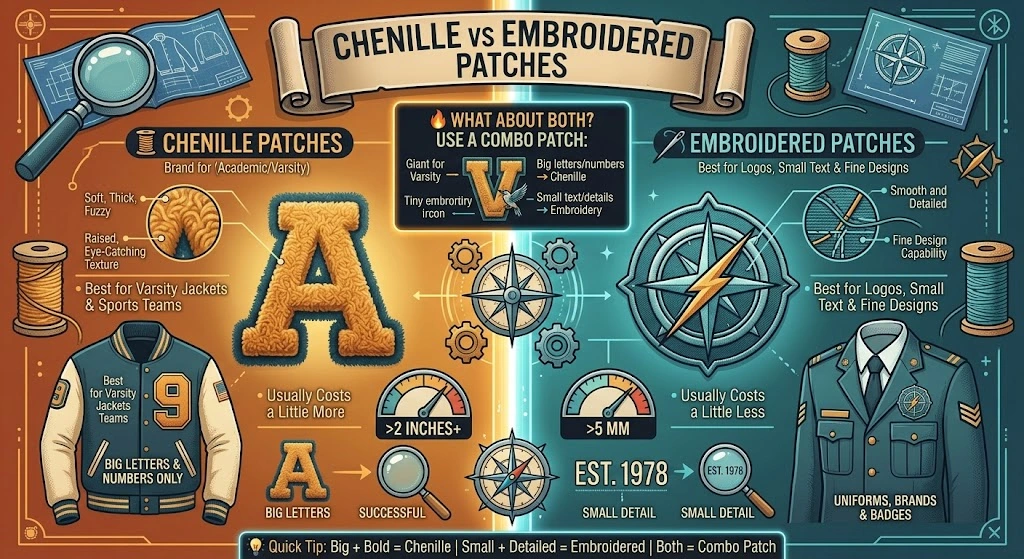
Canvas backpacks look great with embroidered patches, since the stitched finish suits the fabric naturally.
Denim style backpacks pair nicely with embroidered too, for the same reason.
Frequently Asked Questions
Does PVC actually hold up better in Australian sun than other materials?
Yes. Because the colour is moulded into the material itself rather than sitting on the surface, it resists fading far better under strong UV exposure than printed or lower-grade embroidered options.
Can an embroidered patch be used on a beach bag?
It can, but it's not the best fit. Sand, salt water, and sun exposure all work against embroidery over time. PVC handles all three much better.
Is PVC better for kids' school bags?
Generally yes. It copes with rough handling, drops, and the odd rainy day at pickup far better than embroidered fabric does.
Can PVC patches be sewn on rather than ironed?
Yes. Most PVC patches come with small holes already punched around the edge specifically so they can be sewn on for a stronger hold.
How long should a good backpack patch actually last?
A properly sewn patch, PVC or embroidered, should comfortably last several years even with regular daily use in Aussie conditions.
Keen on a Custom Patch for Your Backpack?
StitchKrafts can create both PVC and embroidered patches built to handle Australian conditions, whether you need something tough enough for the outdoors or something softer for an everyday canvas or denim bag.