Chenille vs Embroidered Patches: What Fits Your Project?
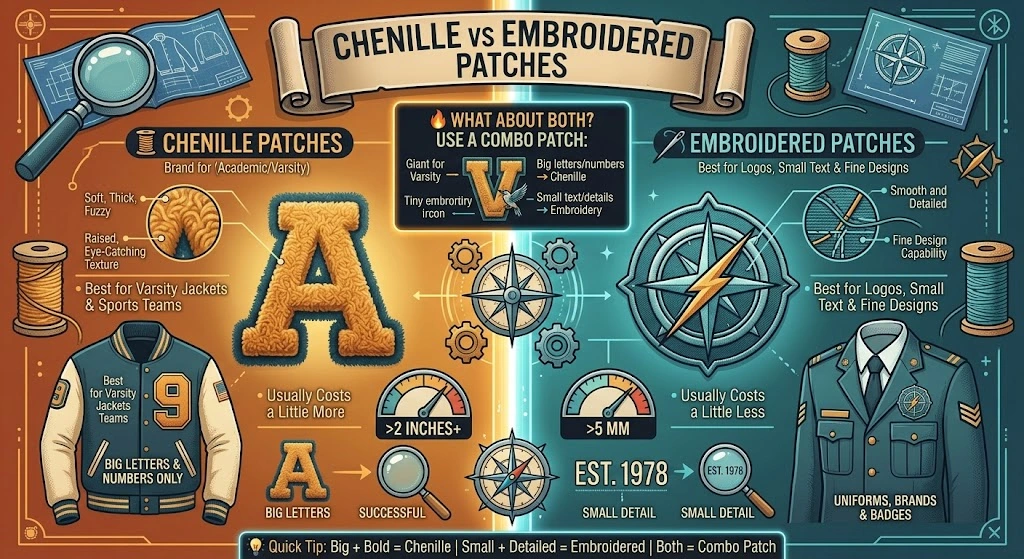
Quick answer: Chenille patches are soft and fuzzy, like a caterpillar's coat. They work best for big, bold letters, like on a varsity jacket. Embroidered patches are smooth and stitched with thread. They work best for small, detailed pictures, like a logo. Pick chenille when you want something big and bold. Pick embroidered when you want something small and detailed.
Let's go through some real examples, so picking the right one feels easy instead of confusing.
What Chenille Actually Feels Like
The word chenille comes from an old French word meaning caterpillar. That is honestly the best way to picture it. Run your finger over a chenille patch and it feels soft, thick, and a little fuzzy, almost like touching the fur on a stuffed toy.
To make one, thick fuzzy yarn gets looped through a soft backing fabric over and over, building up the shape bit by bit until the whole design is filled in. That is why chenille patches sit up so much higher than other patches. You are not just looking at a picture, you are looking at something with real texture you can feel with your hand.
You have probably already seen chenille without knowing what it was called. Think about an old school jacket, the kind with one giant letter stitched onto the chest. That big fuzzy letter is chenille almost every single time.
What Embroidery Actually Feels Like
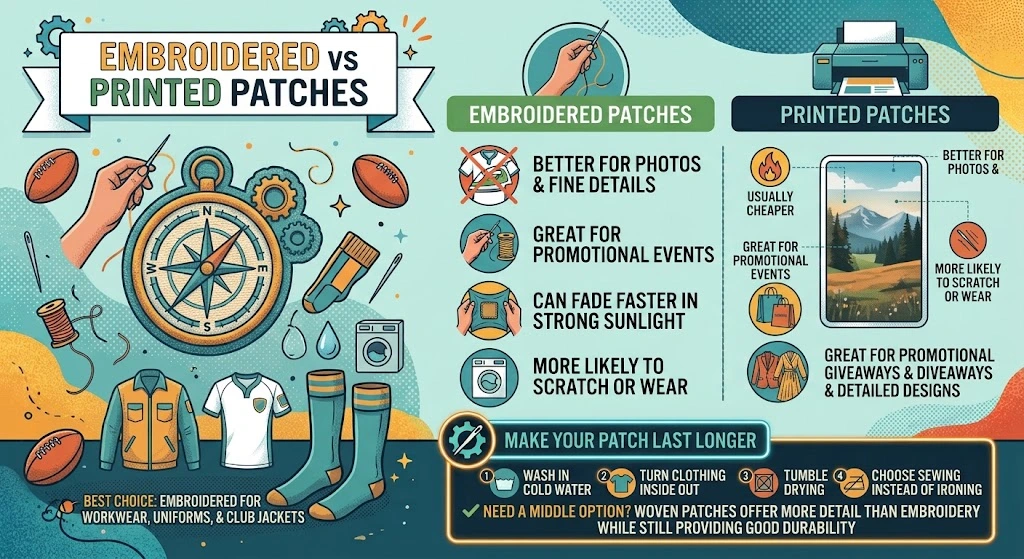
Embroidery works completely differently. A machine uses a needle and thread to stitch a design straight onto fabric, line by line, building up a picture the same way you might draw with a pencil, just using thread instead of lead.
This makes embroidery flat and smooth rather than fuzzy. Run your finger over an embroidered patch and you can feel the little ridges of thread, but nothing like the thick pile of chenille. This smoothness is exactly what lets embroidery capture small, careful details that chenille simply cannot.
Let's Walk Through Some Real Examples
Numbers and rules only mean so much on their own, so here are a few actual situations to make the choice obvious.
Example 1: A School Jacket With the Student's Initials and Graduation Year
The big school letter across the chest works great in chenille, since it is bold, simple, and just one or two characters. But the small graduation year and tiny initials usually stitched near the pocket need to stay embroidered, since chenille cannot shrink down small enough without turning into a blurry blob.
Example 2: A Small Coffee Shop Wants a Logo Patch for Staff Aprons
If the logo has a coffee cup icon and the shop's name written underneath in a normal sized font, embroidery is the only real option here. A logo with fine lines and small text like this would look like a fuzzy smudge in chenille.
Example 3: A Footy Club Wants a Big Number for the Back of a Jersey Style Jacket
A single number, like a big number 7, filling most of the back panel, is a textbook chenille job. It is bold, it is simple, and it is exactly the kind of design chenille was built for.
Example 4: A Streetwear Brand Wants a Small, Detailed Skull Design With Fine Linework for a Limited Drop
This one needs embroidery. Any design with fine lines, shading, or small connected details needs the precision that only thread and a needle can give you.
Example 5: A Dance Team Wants Their Squad Name in Bold Letters, Plus Each Member's Individual Name Smaller Underneath
This is a perfect combo patch situation. The bold squad name goes chenille, the smaller individual names go embroidered, both stitched onto the same patch or the same jacket.
The One Number That Decides Almost Everything
If you remember only one fact from this whole guide, remember this one. Chenille letters generally need to be at least 2 inches tall to look clean and readable. Embroidered letters can go as small as 5 millimetres and still look sharp.
That is a massive difference. It means the size of your smallest text pretty much decides which technique you need, before you even think about texture or style preference.
Side by Side Comparison
| Chenille Patches | Embroidered Patches | |
| Feels like | Soft, thick, fuzzy | Smooth, flat, slightly raised |
| Smallest readable text | About 2 inches tall | As small as 5 millimetres |
| Best for | Big letters, numbers, simple shapes | Logos, small text, fine detail |
| Toughness over time | Good, though heavy rubbing can flatten it | Very tough, holds up well daily |
| Classic use case | Varsity jackets, team letters | Uniforms, brand logos, badges |
| Typical price | A bit higher | Usually a bit lower |
A Detail Almost Nobody Talks About: How Chenille Reacts to Rough Handling
Here is something most guides skip completely. Chenille's raised loops can flatten over time if the patch gets rubbed against something rough a lot, think of a backpack strap constantly rubbing over it, or being crammed into a tight locker every day.
Embroidery does not really have this problem, since the stitching lies much closer to the fabric and has less texture to flatten in the first place. So if your patch is going somewhere that gets a lot of friction, a backpack, the inside of a bag, or clothing that gets folded and squeezed a lot, embroidery is the safer long term pick even if the design itself would technically work in chenille.
Washing and Care Tips for Each Type
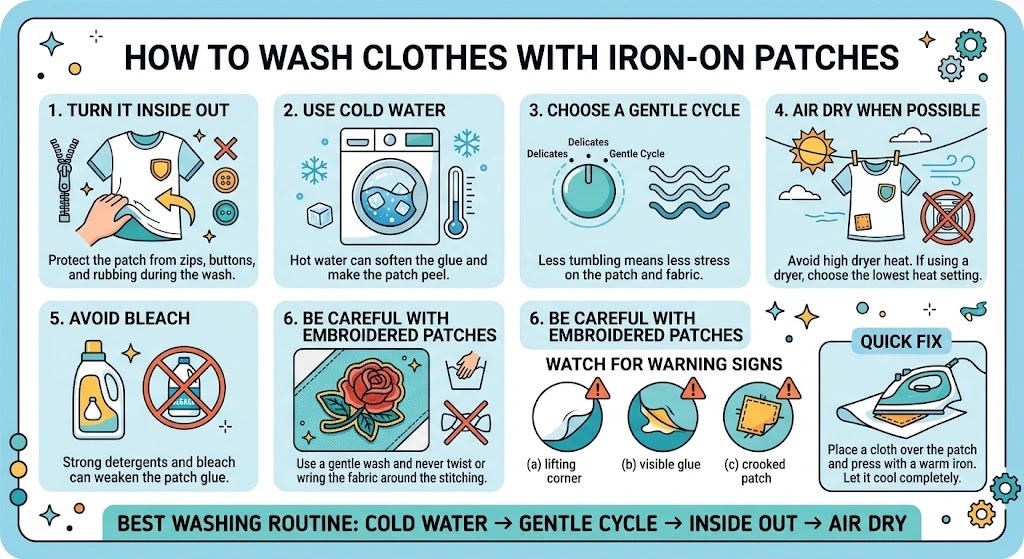
Wash both types on a cold, gentle cycle rather than anything hot or heavy duty. Turn the item inside out before washing, which helps protect chenille's raised texture from rubbing against other clothes in the machine.
Skip the tumble dryer where you can, especially for chenille, since heat and tumbling are the fastest way to flatten that fuzzy pile over time.
If a chenille patch does start looking a little flat after a lot of washing, gently brushing it with a soft, clean toothbrush in one direction can help fluff the yarn back up a little.
Combo Patches: Getting the Best of Both
A combo patch simply means using both chenille and embroidery on the same design. The bold part, like a big letter or number, goes chenille. The detailed part, like small text or a fine logo, goes embroidered. Both get stitched onto the same base.
Schools and sports teams use this constantly, since it lets one jacket carry both a big eye catching letter and small detailed extras, like a player's name or a graduation year, without forcing everything into one single style.
Which One Costs More, and Why
Chenille usually costs a bit more than embroidery for the same size patch. This comes down to how it is made, the thick yarn and the extra build up time simply take more material and more machine time than standard stitching.
If you are working with a tighter budget, embroidery tends to be the friendlier option, especially for larger patches or bigger orders, since the cost per patch does not climb as steeply.
A Quick Way to Decide for Your Own Project
Ask yourself these two things. First, how small is the smallest text or detail in your design? If it needs to be smaller than about 2 inches, embroidery is your only real option. Second, will the patch face a lot of rubbing or rough handling, like on a bag or heavily worn clothing? If so, lean toward embroidery even for bigger, simpler shapes.
If your design has both a big bold element and some small detail, do not force yourself to pick just one. A combo patch handles both parts properly.
Frequently Asked Questions
Can Chenille Patches Show Small Writing?
Not really. Chenille yarn is too thick to form small letters cleanly, so anything under about 2 inches tall tends to blur together and become hard to read.
Which Type Lasts Longer With a Lot of Washing?
Embroidered patches generally hold up a bit longer, since the tighter stitching resists wear better than chenille's softer, thicker yarn.
Does Chenille Flatten Over Time?
It can, especially if it rubs against something rough often, like a backpack strap. Gently brushing the yarn with a soft toothbrush can help restore some of the fluffiness.
Why Do Chenille Patches Usually Cost More?
The thick yarn and the extra time needed to build up that raised texture takes more material and machine time than standard embroidery, which pushes the price up slightly.
Can I Combine Chenille and Embroidery on One Patch?
Yes, this is called a combo patch, and it is very common. Bold letters or numbers go chenille, while smaller text or detail goes embroidered on the same piece.
Which One Is the Classic Choice for a Varsity Jacket?
Chenille, without question. That soft, raised texture is exactly what gives varsity jackets their traditional, recognisable look.
Ready to Choose the Right Patch for Your Project?
If you are picturing something big, bold, and a little retro, our chenille patches bring that classic raised, fuzzy texture to any jacket or uniform.
If your design leans small and detailed instead, our embroidered patches are built to keep fine logos and text crisp through years of everyday wear.
Still not sure which one fits? StitchKrafts Australia can walk through your specific design with you before you commit to an order.