PVC vs Woven Patches: Best Pick for Outdoor Gear
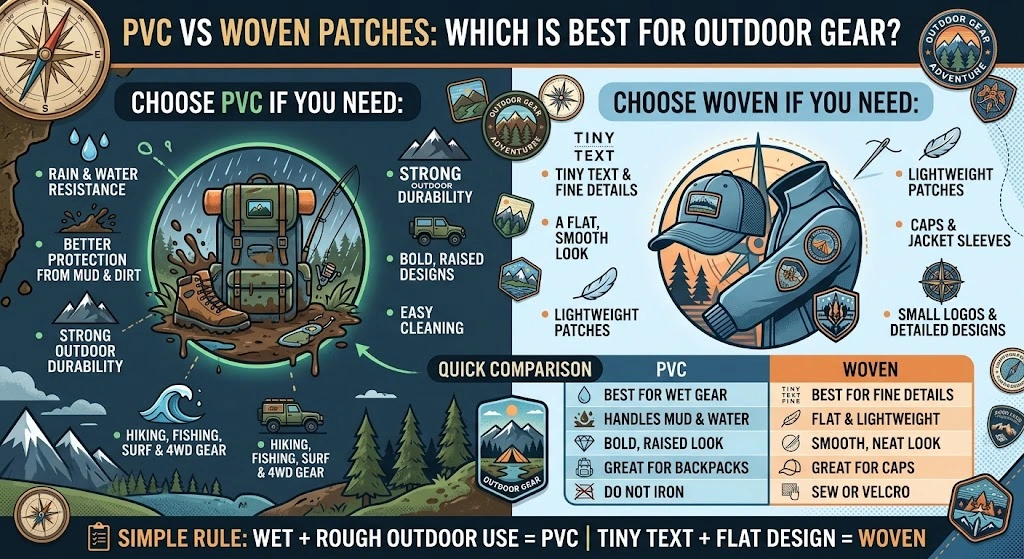
Quick answer: PVC patches are the best pick for gear that gets wet, muddy, and sunburnt, like hiking packs, tent bags, and fishing gear. Woven patches are the best pick for small writing and flat, neat looks, like on caps and jacket sleeves. If your gear lives outside, choose PVC. If your design has tiny words, choose woven.
Australia is tough on outdoor gear. The sun is strong, the dust gets everywhere, and the rain can turn up out of nowhere. Let’s find out which patch can handle it.
The Short Version: 5 Quick Steps to Pick
- Think about the weather. Will the patch get rained on, sprayed, or splashed a lot?
- Think about the words. Is there tiny writing on your design?
- Think about the spot. Is it on a pack, a cap, a jacket, or a bag?
- Think about how it sticks on. Sew, Velcro, or iron?
- Pick one. Wet and rough means PVC. Tiny words and flat means woven.
That is the quick way. Now let’s go through each step slowly, with real examples.
The Long Version: Every Step Explained
Step 1: Know What Each Patch Is Made Of
PVC patches are made from a soft, rubbery material, a bit like a toy or a rubber duck. The colour is poured into a mould and set hard. This makes the patch bouncy, bendy, and strong.
Woven patches are made from very thin thread, woven tightly together like tiny cloth. The thread is so thin that it can show very small writing and fine lines. The patch feels flat and smooth.
So one is rubber, and one is cloth. That one difference explains almost everything else.
Step 2: Think About Water
Rubber and water are good friends. Cloth and water are not.
PVC does not soak up water. Rain just rolls off. If it gets muddy, you wipe it clean with a damp cloth. If it gets splashed at the beach, you rinse it with fresh water.
Woven is made of thread, and thread soaks up water. A wet woven patch can stay damp for a long time, especially if you pack your bag away wet. Damp cloth that stays closed up can start to smell, and it can even grow mould.
So if the patch will get wet often, PVC is the safer choice.
Step 3: Think About the Aussie Sun
The sun in Australia is strong. It fades colour on things that sit outside for a long time, like a pack on the roof of a 4WD or a cap on the beach.
PVC has its colour set into the material, so the sun does not wash it out easily.
Woven can fade over time in strong sun, especially if the thread is a cheap kind. If you pick woven for outdoor gear, ask for polyester thread. It holds its colour much better than other types in bright sun.
Step 4: Think About Tiny Writing
This is where woven wins, and it wins by a lot.
Woven thread is so thin that it can show tiny words, thin lines, and small details clearly. If your logo has small letters, a website address, or a detailed picture, woven will keep it sharp.
PVC is made from thick, moulded shapes, so it works best with big, bold designs. Very tiny words can turn into a blur.
If your design has small writing and the patch will be used outdoors, you have a choice to make. You can make the design bolder and simpler and use PVC. Or you can keep the detail and use woven, then keep it out of the worst weather.
Step 5: Think About How It Feels and Sits
Woven patches lie flat against the fabric. They do not stick out, so they do not snag on straps, branches, or other bits of gear. This is why they work so well on caps and on jacket sleeves.
PVC patches are raised and chunky. They stand out and look bold, but the edge can catch on things. Think about where the patch will sit before you choose. A PVC patch on the front of a pack is fine. A PVC patch where a strap rubs across it might get caught.
PVC is also a bit heavier than woven. A big, thick PVC patch on a thin cap can make the cap sag, so keep it to small or medium sizes there.
Step 6: Pick the Right Patch for Your Gear
Here are some real examples to make it easy.
| Your Gear | Best Pick | Why |
| Hiking backpack | PVC | Handles rain, mud, and sun |
| Tent bag or swag cover | PVC | Gets wet and dirty a lot |
| Fishing gear and tackle bags | PVC | Water and salt splash on it |
| Surf and beach bags | PVC | Sand, salt, and sun |
| 4WD seat covers and canopy bags | PVC | Dust and strong sun |
| Cap or bucket hat | Woven | Flat, light, and neat |
| Soft jacket sleeve | Woven | Sits flat, shows small text |
| Small logo on a shirt | Woven | Shows fine detail clearly |
| Dog harness or pet gear | PVC | Gets wet and chewed on |
| Kids’ school bag | PVC | Rough handling and rain |
If you need help choosing a patch for packs and bags, our guide on the best patch material for backpacks in Australia goes into more detail.
Step 7: Pick How It Sticks On
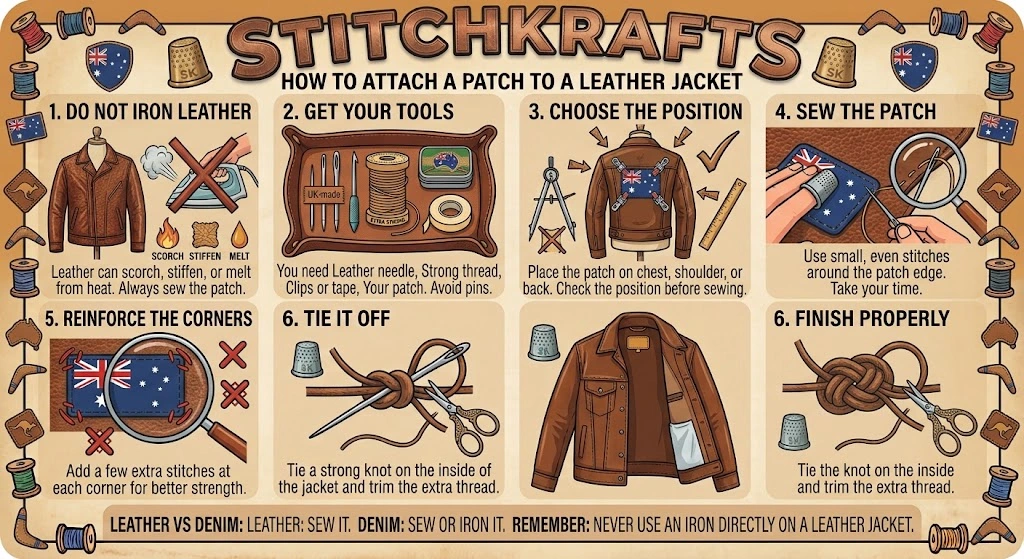
For PVC patches, the best choices are sew on or Velcro. PVC patches often come with little holes around the edge for sewing. Velcro is great for packs, since you can swap patches easily. Do not iron a PVC patch, since heat can damage the rubber.
For woven patches, sewing is the strongest choice. Iron on can work on cotton fabric, but it can melt or mark stretchy sports fabric. Velcro works well on caps and bags where you want to swap patches.
For anything that will see rough weather, sewing is almost always stronger than glue or iron on.
Step 8: Think About Cost
PVC patches usually cost a little more than woven ones. This is because the mould and the material cost more to make. Woven patches are usually cheaper, especially for smaller sizes.
If your budget is tight and your gear will not be out in the rain much, woven is a smart saver. If your gear spends its life outside, paying a bit more for PVC usually saves you from buying a second patch later.
Can You Use Both?
Yes, and some people do. A hiking pack might use a bold PVC patch on the front, where it takes the weather, and a small woven patch on the inside of the lid, where it stays dry and shows fine detail.
A brand might also put a PVC patch on the outside of a jacket and a small woven label on the inside collar. Each one is doing the job it is best at.
How to Look After Each Type
PVC: Wipe it with a damp cloth. Rinse off salt water and sand with fresh water. Do not leave it sitting in a very hot car for days, since extreme heat can soften the rubber a little.
Woven: Wash gently in cold water. Let it dry fully before you pack the bag away, so it does not smell or grow mould. Keep it out of long, direct sun if you can.
Common Mistakes to Avoid
Choosing woven for gear that is always wet. Choosing PVC for a design with tiny words. Putting a big PVC patch on a thin cap. Using cotton thread on a woven patch for outdoor use, since it fades. Ironing a PVC patch. And packing wet gear away with a woven patch still damp.
Frequently Asked Questions
Which is better for outdoor gear, PVC or woven patches?
PVC is better for gear that gets wet, muddy, or sunburnt, since it does not soak up water and holds its colour in the sun.
Are woven patches good for outdoor use?
They can work for light outdoor use, especially on caps and jackets. They are not as good as PVC for gear that is wet all the time.
Do PVC patches fade in the Australian sun?
They hold their colour much better than fabric patches, since the colour is set into the material.
Can woven patches show small text?
Yes. Woven thread is very thin, so it shows tiny words and fine details clearly.
How do you attach a PVC patch to a backpack?
Sew it on through the edge holes, or use Velcro backing so you can swap it. Do not use an iron on PVC.
Which costs more, PVC or woven?
PVC usually costs a little more, since the material and the mould cost more to make.
Ready to Choose Your Outdoor Patch?
If your gear faces rain, mud, and strong sun, our PVC patches are built to handle it.
If your design needs small words or a flat, neat look, our woven patches keep the fine details sharp.
Not sure which one fits? Browse our full range of custom patches, or ask StitchKrafts Australia to help you choose before you order. We work with outdoor brands and clubs in Brisbane, Sydney, and all across the country.