How to Attach a Patch to a Leather Jacket the Right Way
Picture this. Your local footy club just had a patch made up for the jackets, and you have volunteered to sew yours on before Saturday's game. You have got a leather jacket, a patch, and about twenty minutes to spare. Here is exactly how to get it done properly, without ruining the jacket in the process.
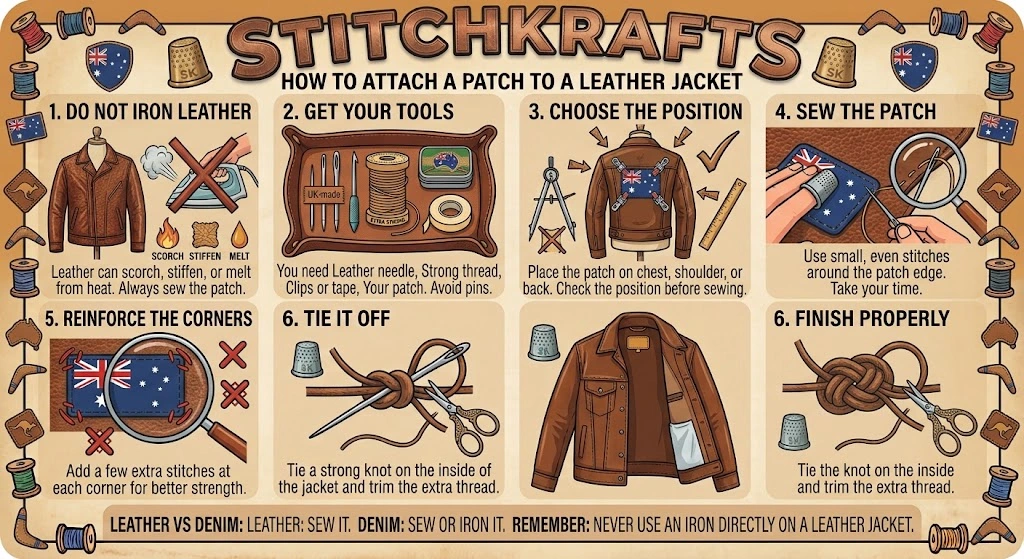
Quick answer: Sew the patch on, do not iron it. Leather does not cope with heat the way denim does. Hold the patch with clips or tape instead of pins, then sew it on slowly using a needle made for leather.
Why You Cannot Just Iron It On
If this jacket were denim, you could have this sorted in under a minute with an iron. Leather is a different story entirely.
Leather does not stretch or breathe like fabric does, and a hot iron pressed against it for half a minute can leave it scorched, stiff, or slightly melted in that spot. That is the whole reason sewing is the go to method here, not because it is old fashioned, but because it is the only method that actually works without damaging the jacket.
Getting Set Up
Before you start on that club jacket, grab a needle made for leather rather than a regular one, since a standard needle tends to bend or get stuck partway through. Strong thread helps too, doubled up for extra strength.
Skip the pins entirely. They leave small holes in leather that never close back up. Small clips around the edge or a strip of tape will hold your patch steady while you work, without marking the material at all.
Where Should the Patch Actually Go?
Most club jackets go for the chest or a shoulder, though a larger patch might suit the back panel better. Lay it on the jacket first without sewing anything. Step back, have a look, and make sure it sits straight before you commit to a single stitch.
Time to Sew
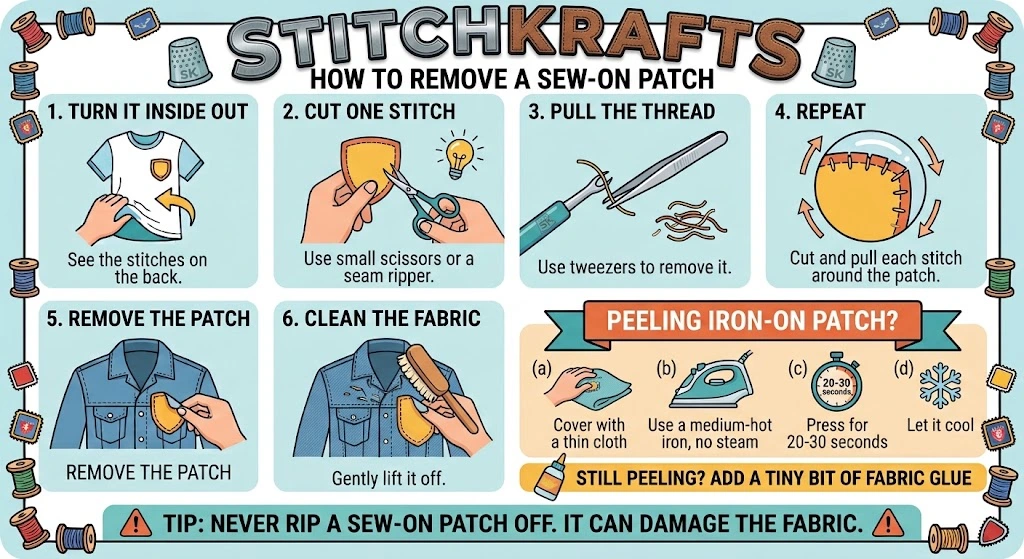
Knot your doubled thread securely, then start from the inside of the jacket. Bring your needle up through the edge of the patch, then back down through the leather right beside it. Keep working your way steadily around the whole edge.
Try to keep your stitches small and roughly the same size the entire way round. Leather has zero stretch, so any unevenness in your stitching becomes obvious fast, which is exactly why it pays to go slowly rather than rushing to get it done before kickoff.
Once you have gone all the way around, double back over each corner with a couple of extra stitches. Corners cop the most strain over time, especially on a jacket that gets worn to training, to the pub, and everywhere in between.
Finish by tying your knot on the inside, never the outside, and trim the extra thread close to the knot so nothing is left hanging.
If It Had Been a Denim Jacket Instead
Say a mate on the team has a denim jacket instead and wants the same patch sewn on. That job looks completely different.
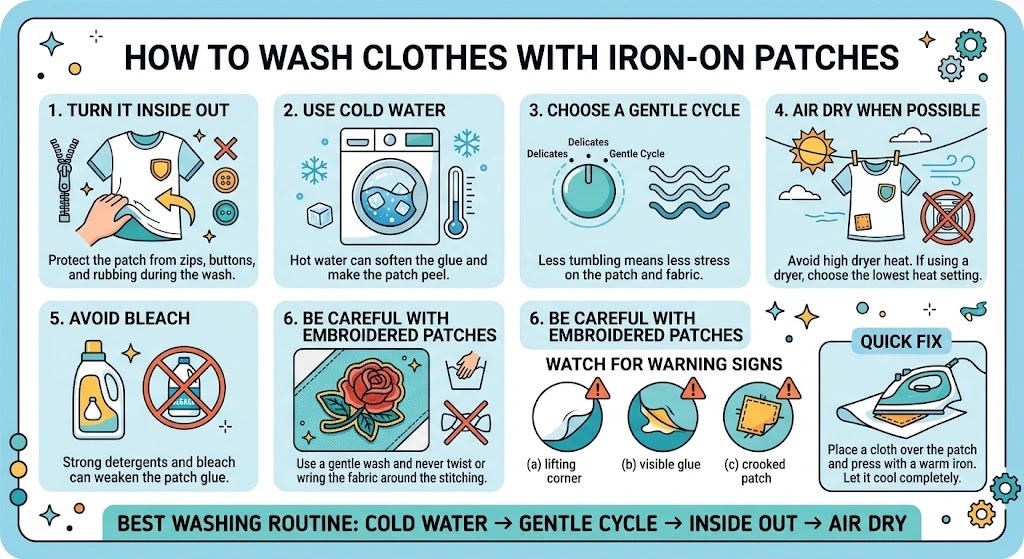
To iron a patch on a denim jacket, place it exactly where you want it, cover it with a thin cloth, and press a hot iron down firmly for around 20 to 30 seconds. Flip the jacket inside out and press again from the back for extra hold. Let it cool right down before anyone puts it back on.
Denim handles heat that would genuinely ruin leather, which is why these two jobs call for two completely different approaches, even though the end result looks much the same.
Thinking About Your Next Order
If your club is planning to order patches for the whole team, it is worth thinking about attachment before you place the order, not after everyone is stuck sewing on game day. Some clubs go for custom leather patches with a hook and loop backing instead, which skips sewing altogether if players want to move patches between jackets.
For denim jackets, either method works fine, though sewing tends to last longer through regular washing over a full season.
Picking the Right Patch for the Job
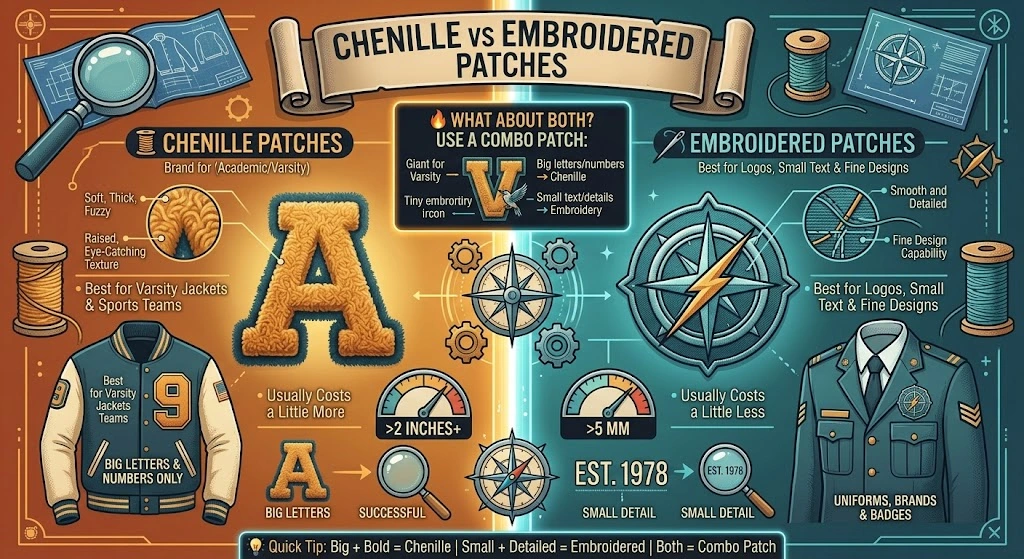
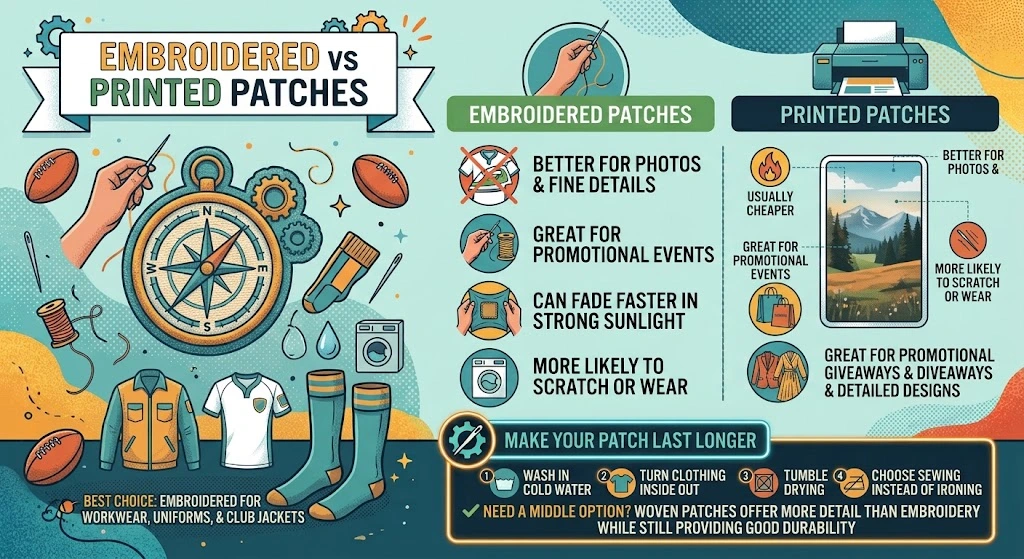
If most of the team is wearing denim rather than leather, embroidered patches tend to suit that ironed on style particularly well, holding up nicely through both heat and the wash. For leather jackets, what matters most is a solid, sturdy edge that can actually take a needle cleanly.
If the Club Logo Still Needs Sorting
Sometimes a club crest or logo is not quite ready to become a patch yet, especially if it has only ever existed as a low quality image. A vector art service can clean this up so the finished patch looks sharp rather than blurry around the edges.
Once the artwork is ready, it still needs to be turned into a stitch file before it can be embroidered. This step is handled through embroidery digitising, and it is what makes the whole process possible in the first place.
Common Questions
Does sewing leave holes in a leather jacket?
Small needle holes are completely normal, much like any stitched seam, and they are barely noticeable once the patch is in place.
Could you use a sewing machine instead of doing it by hand?
Some heavy duty machines manage thin leather reasonably well, but hand sewing gives far more control, especially on a jacket you want to get right the first time.
Is there any way to safely iron a patch onto leather?
Not really. The risk of scorching or stiffening the leather is too high, which is why sewing remains the reliable choice.
Do embroidered patches need different care when sewn onto leather?
No, the same method applies regardless of what the patch itself is made from, as long as there is a solid edge to stitch through.
How long should a properly sewn leather patch actually last?
With even stitching and reinforced corners, it can easily last for years, even through a full season of regular wear.
Sorting Out Your Patch
Whether you are in Melbourne or Sydney, StitchKrafts Australia can help you order leather patches tough enough for everyday wear, footy season included. Working with denim jackets instead? We can help there too. Already have a design ready to go? We can turn it into a patch made to your exact size, shape, and colour.