

How to Remove Old Patch Adhesive Residue from Fabric
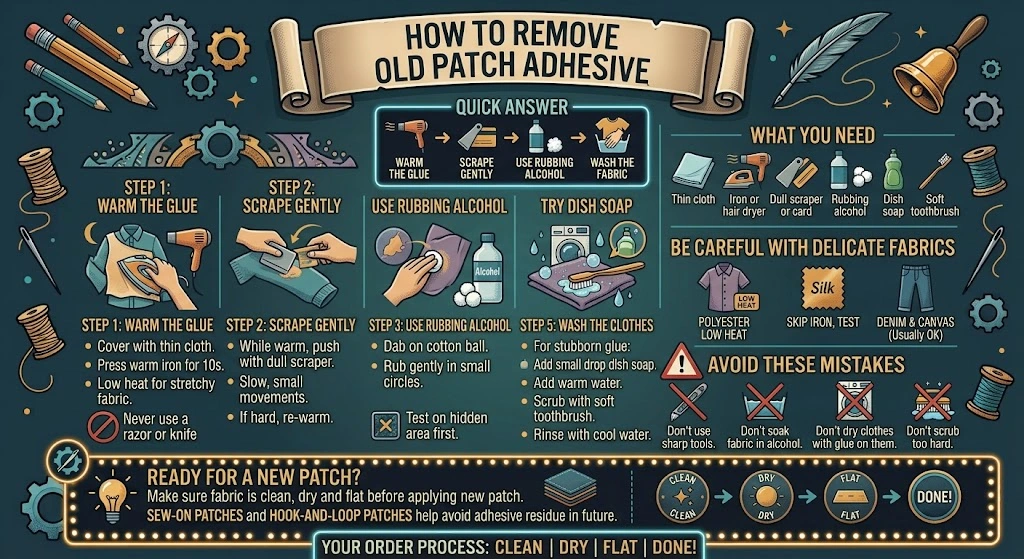
Quick answer: Use gentle heat to soften the sticky glue, then scrape it off slowly with a dull edge. If some stays behind, dab it with rubbing alcohol on a cloth. Wash the clothes when you are done. Always start with the gentlest step first, so you do not hurt the fabric.
You took the old patch off. Now there is a sticky, cloudy spot where it used to be. That spot is old glue. It is annoying, but you can fix it at home with things you already have.
What Is This Sticky Stuff?
Iron-on patches have a layer of glue on the back. When you press a hot iron on the patch, the glue melts and sticks to your clothes. Later, when the patch comes off, some of the glue can stay behind on the fabric.
Old glue can feel hard, sticky, or a little bit shiny. It can also pick up lint and dirt, which makes it look gray. The good news is that this glue was made to melt with heat, so heat is your best helper.
If you are still working on getting the patch itself off, our guide on how to remove iron-on patches in minutes shows you how to do that part safely first.
Before You Start: Ask Two Quick Questions
These two questions tell you which steps to use.
Question 1: What is the fabric?
Cotton, denim, and canvas are strong. They can take heat and most cleaners. Polyester, nylon, and stretchy fabric are softer. They can melt or get shiny if the iron is too hot. Silk, rayon, and delicate fabric need extra care, so go slow with these.
Question 2: How old is the glue?
Fresh glue, from a patch that came off yesterday, is still soft. It comes off easily. Old glue, from a patch that was on for years, has turned hard and dry. It needs a little more work, and that is okay.
Check the tag inside your clothes. It tells you the fabric type and how hot the iron can be.
What You Will Need
You do not need fancy things. Gather these:
- A clean, thin cloth, like an old cotton t-shirt.
- A dull scraper, like an old credit card or a butter knife.
- An iron or a hair dryer.
- Rubbing alcohol and a few cotton balls.
- A little dish soap.
- A soft toothbrush.
- Paper towels.
Never use anything sharp, like a razor blade. It can cut the threads and make a hole.
Step 1: Warm the Glue With Heat
Heat makes the old glue soft and gooey again, just like when it was first put on.
Put your thin cloth over the sticky spot. Press a warm iron on top for about ten seconds. Do not slide it around. Just press and hold. If your fabric is stretchy or shiny, use the low heat setting.
No iron? A hair dryer works too. Aim it at the glue for about a minute on the hottest setting. It just takes a little longer.
Step 2: Gently Scrape It Off
While the glue is still warm, take your dull scraper and gently push it across the spot. The soft glue should roll up into little bits or peel away in sticky strips.
Go slow and use small movements. Do not push hard. If the glue starts to feel hard again, warm it up one more time and keep going.
Wipe the scraper on a paper towel as you work so the glue does not smear around.
Step 3: Use Rubbing Alcohol for What Is Left
Sometimes a thin, sticky film stays behind after scraping. This is where rubbing alcohol helps. It breaks down glue without being too rough on most fabric.
Put a little alcohol on a cotton ball. Dab it on the sticky spot. Do not pour it on. Let it sit for about one minute, then rub in small circles. You should see the glue start to loosen and stick to the cotton ball.
Use a fresh cotton ball when the first one gets dirty. Keep going until the fabric feels smooth and not sticky.
Always test alcohol on a hidden spot first, like the inside of a hem. Wait a few minutes. If the color stays the same, you are good to go.
Step 4: Try Dish Soap for Stubborn Spots
If a few sticky bits are still there, dish soap can help. It cuts through gooey stuff, just like it does with greasy dishes.
Put one small drop of dish soap on the spot. Add a tiny bit of warm water. Rub it gently with the soft toothbrush. Then rinse the spot with cool water and blot it dry with a clean cloth.
Step 5: Wash the Clothes
When the glue is gone, wash your clothes like you normally do. This cleans away any leftover alcohol or soap.
Before putting them in the dryer, check the spot. If you still see a sticky mark, do the steps again. The dryer can make leftover glue harden into the fabric, so it is smart to check first.
What if the Fabric Is Delicate or Stretchy?
Some fabric needs a softer touch.
For polyester and stretchy fabric, use the lowest heat and never leave the iron in one spot. If the fabric starts to look shiny, stop right away. Try alcohol first instead of heat.
For silk, rayon, and other delicate fabric, skip the iron completely. Use only a dab of alcohol on a hidden spot to test, and go very slowly. If you are not sure, ask a dry cleaner before you try anything.
For strong fabric like denim and canvas, you can use the full steps above without worry.
Real Life Mistakes to Avoid
Do not use a razor blade or a knife with a sharp edge. It cuts the fabric faster than you can notice. Do not soak the fabric in alcohol, because a little goes a long way. Do not skip the hidden spot test, especially on dark or bright colors. Do not put the clothes in the dryer with glue still stuck on them, since heat locks the glue in even tighter. And do not scrub really hard, because rubbing too hard can fuzz up the fabric.
Getting Ready for a New Patch
Once the old glue is completely gone, you have a clean spot again. Maybe you want to cover it with something fresh. Before you put on a new patch, the fabric should be clean, dry, and flat. Leftover glue can stop a new patch from sticking well.
For a patch that lasts longer, try embroidered patches. You can sew them on with thread, so you never have to deal with sticky glue again. That is a big help for jackets, school bags, and things you wash a lot.
Keeping Patches From Leaving Glue Behind Next Time
The best way to stop sticky glue is to pick the right kind of patch from the start. Sewn patches leave only tiny thread holes, not sticky marks. If you like to swap patches often, a patch with a hook and loop backing comes off clean every time.
If you are planning a design of your own, browsing custom patches lets you choose the backing that fits how you use your clothes, so you are not stuck scraping glue later. StitchKrafts USA can help people in Chicago and all across the country pick the right one.
Frequently Asked Questions
What is the fastest way to get patch glue off clothes?
Warm it with an iron over a thin cloth, then gently scrape it with a dull edge. Most glue comes off in just a few minutes this way.
Will rubbing alcohol ruin my clothes?
Usually not, but always test a hidden spot first. Dark and bright colors can sometimes change, so it is worth checking before you use it on the visible part.
Can I use a hair dryer instead of an iron?
Yes. A hair dryer on high heat softens the glue too. It just takes a little longer than an iron.
Why does my glue spot look gray?
Old glue picks up lint and dirt over time. Once the glue is removed, the gray color usually goes away too.
Will the glue come off in the washing machine?
Washing alone usually does not remove it. You need to soften and lift the glue first, then wash the clothes to clean up what is left.
Can I put a new patch over the old glue?
It is best to clean it first. Leftover glue can stop a new patch from sticking well, and it can leave a lumpy bump under the patch.