How to Design Custom Patches: Ideas, Tips, and Trends for 2026
Designing a custom patch is not just about choosing a shape and adding a logo. A good patch clearly represents who you are and what your brand, team, or group stands for. It should be easy to recognise, easy to read, and suitable for how it will be used, whether on a jacket, uniform, backpack, or cap.
At StitchKrafts, we help customers every day turn simple ideas into high-quality custom patches that look professional and last long. This guide explains the custom patch design process in plain language. It covers practical design tips, common mistakes to avoid, and the latest custom patch trends for 2026.
This blog is useful for businesses, clubs, teams, fashion brands, and anyone designing custom patches for the first time.
Why Good Custom Patch Design Matters
A patch may be small, but it has a big impact. Poorly designed patches often lose detail, look crowded, or do not stitch cleanly. This affects how professional your patch looks once it is made.
A well-designed custom patch:
- Is clear and readable from a distance
- Matches its purpose, such as uniforms, branding, or fashion
- Looks clean and professional
- Holds up well after regular use and washing
Most design problems happen when too many elements are added. Good patch design focuses on clarity, not complexity.
Step 1: Decide the Purpose of Your Patch
Before designing anything, decide what the patch will be used for. The purpose of the patch affects every design choice.
Different uses need different designs:
- Patches for clubs and teams use bold symbols, mascots, and strong borders
- Custom patches for businesses use clean logos and simple brand colours
- Army or tactical patches use limited colours and clear insignia
- Fashion or artisanal patches focus on creative artwork and textures
When the purpose is clear, it becomes easier to choose the right size, colours, and patch style.
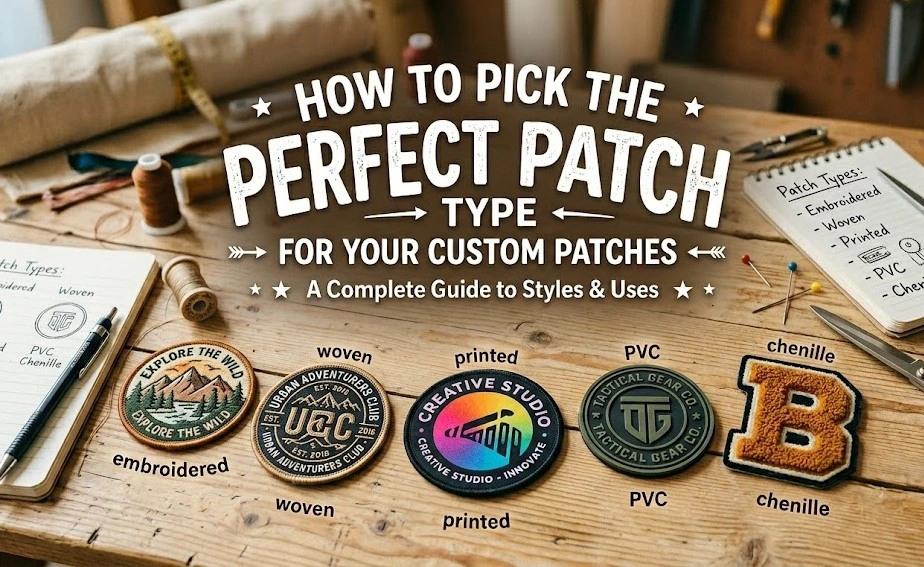
Step 2: Choose the Right Patch Type
Many people design a patch first and choose the patch type later. This often causes problems. It is better to select the patch type early so the design fits the material.
Embroidered Patches
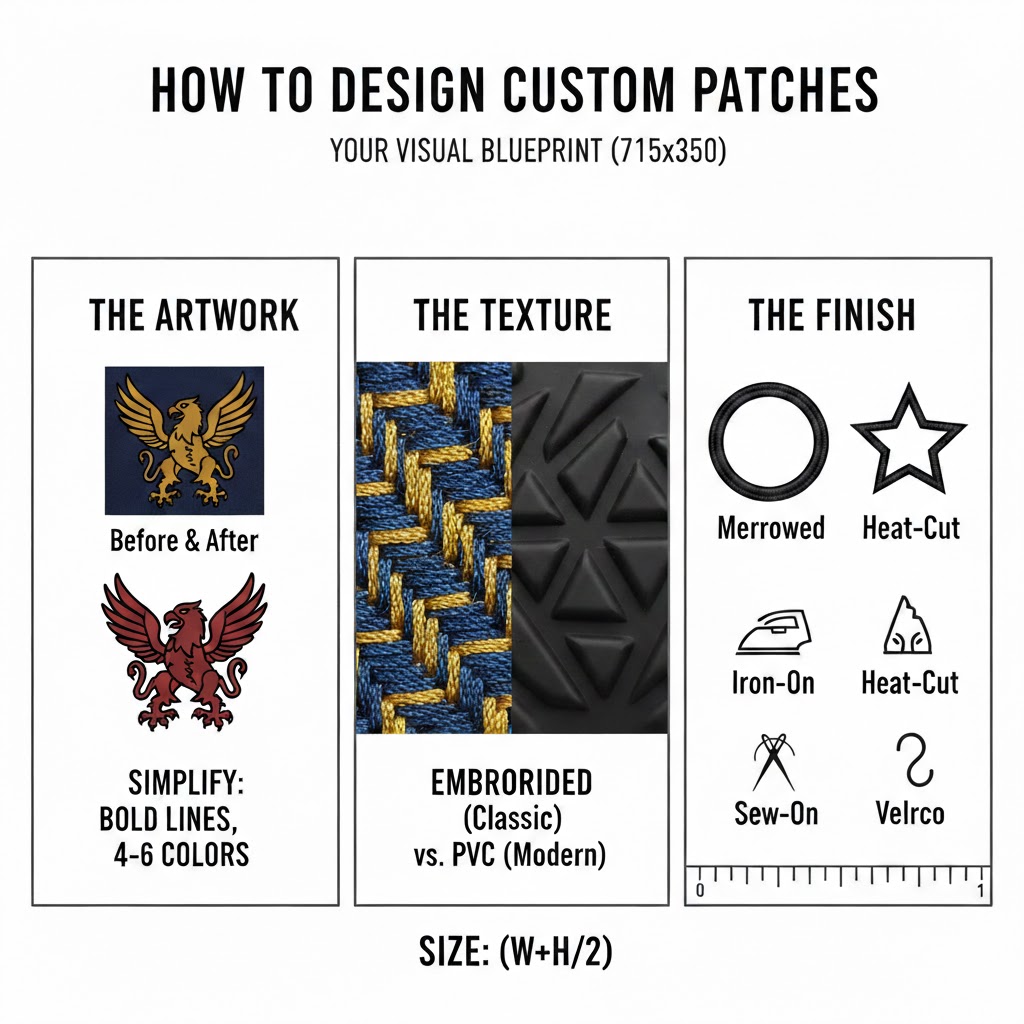
Embroidered patches work best for bold designs with thicker lines. They are commonly used for uniforms, biker patches, and club patches.
Woven Patches
Woven patches are better for small text and fine details. They use thinner threads, which makes them easier to read.
PVC or Rubber Patches
PVC patches are durable and weather-resistant. They are ideal for army, tactical, and outdoor use.
Printed Patches
Printed patches are suitable for designs with gradients, photos, or many colours.
Chenille Patches
Chenille patches have a soft, raised texture and are popular for varsity jackets and fashion items.
Choosing the right patch type early helps avoid redesigns later.
Step 3: Keep the Shape and Border Simple
Patch shape affects both appearance and cost. The most common and effective shapes include:
- Circle
- Shield
- Rectangle
- Simple custom shapes
Using a clear border, such as a merrowed or satin edge, helps frame the design and prevents fraying. Complex edges may look good on screen but often lose detail during stitching.
Step 4: Choose Colours That Work Well
Colour choice is one of the most common design issues. When designing custom patches:
- Use high-contrast colours
- Limit the number of colours to three to six
- Avoid small colour changes in tiny areas
For patches on shirts, choose colours that either match or clearly contrast with the fabric. For workwear and uniforms, neutral colours with one accent colour usually work best.
Step 5: Use Fonts That Stitch Clearly
Fonts that look good on a screen may not stitch well. Thin or decorative fonts often become hard to read once embroidered.
For text on patches:
- Use bold, simple fonts
- Avoid very thin lettering
- Increase spacing between letters
- Make sure text is readable from arm length
This is especially important for custom badge designs used for identification or branding.
Custom Patch Design Ideas by Use Case
Below are practical design ideas based on common customer needs.
Custom Patch Design Ideas for Army and Tactical Use
- Unit numbers and symbols
- Call signs or morale text
- Limited colour palettes such as black, olive, or tan
- PVC or embroidered patch styles
Custom Patch Design Ideas for Shirts and Clothing
- Chest-size logo patches
- Minimal line art designs
- Simple colour blocking
- Woven or printed patches
Custom Patch Ideas for Small Businesses
- Logo patches for staff uniforms
- Promotional or giveaway patches
- Limited-edition designs
- Simple designs to keep costs affordable
Artisanal Patches for Fashion
- Hand-drawn artwork
- Vintage-style illustrations
- Nature-inspired designs
- Layered textures and stitching
These ideas work well for DIY clothing customisation and fashion-focused patches.
Patch Placement Guide: Where Your Patch Should Go
Patch design should match where it will be placed. Common placement options include:
- Left chest for logos or names
- Sleeves or shoulders for clubs and flags
- Back panels for large designs
- Caps and hats for simple designs only
Large patches allow more detail. Smaller areas, such as caps, need clean and simple designs.
Custom Patch Trends for 2026
Based on current orders and customer demand, these custom patch trends are popular for 2026:
- Minimalist designs with bold borders
- Retro and vintage-inspired patches
- Eco-friendly materials and muted colours
- 3D embroidery elements
- Oversized patches for fashion and streetwear
These trends work well for branding, retail, and fashion-focused custom patches.
DIY vs Professional Patch Design
DIY designs can work for personal projects, but professional help is useful when you need:
- Clean, stitch-ready artwork
- Accurate colour matching
- Consistent sizing for reorders
- Long-lasting patch quality
Many customers start with a rough idea and let professional designers refine it into a production-ready design. This saves time and avoids costly mistakes.
How to Prepare Your Design for Ordering
Before ordering custom patches online, make sure you have:
- A clear idea or reference image
- Your preferred patch type
- Approximate size
- Required quantity
- Patch placement in mind
You do not need a perfect design file. Even a simple concept is enough to start the process.
You can also explore related guides on:
- Types of Custom Patches Explained
- Custom Patches for Businesses, Clubs, and Teams
- How to Order Custom Patches Online
Summary: How to Design Custom Patches
To design a custom patch, start by deciding its purpose and where it will be used. Good patch designs are simple, clear, and made to last. Choosing the right patch type affects how the design looks and performs.
Strong patch designs use bold colours, easy-to-read fonts, and clean shapes. Patch size and placement should match the garment or item it will be attached to.
In 2026, popular patch trends include minimalist designs, bold borders, eco-friendly materials, and handmade styles. DIY designs are fine for small projects, but professional services help ensure quality, accuracy, and durability.
Frequently Asked Questions About Custom Patch Design
What is the best way to design a custom patch?
Keep the design simple, use bold colours, choose clear fonts, and select the right patch type for the purpose.
What types of custom patches are most popular?
Embroidered, woven, PVC, printed, and chenille patches are the most commonly used.
How do I choose the right patch type?
Embroidered works for bold designs, woven for fine details, PVC for durability, and printed for full-colour artwork.
What are the top custom patch trends for 2026?
Minimalist designs, vintage styles, eco-friendly materials, 3D embroidery, and oversized fashion patches.
Are custom patches suitable for small businesses?
Yes. Custom patches are affordable and effective for branding, uniforms, and promotions.
Can I order custom patches without a final design?
Yes. A rough idea or sketch is enough to start the design process.
Final Thoughts: Design with Purpose, Not Pressure
The best patch designs are not the most complex. They are the most thoughtful. When you understand your purpose, choose the right patch style, and keep the design clean, your patch naturally stands out.
Whether you are creating one patch or launching a full collection, take your time, follow these tips, and do not hesitate to lean on professional custom patches expertise when needed. A well-designed patch is not just decoration. It is identity you can wear.