

Do Iron-On Patches Actually Work on Backpacks?
Quick answer: Sometimes, but not always. Iron-on patches can work on backpacks, but it depends on the fabric, how the bag gets used, and how well the patch is put on in the first place. On a smooth, sturdy backpack, they can hold up well. On a bag made of tricky material like nylon, they often fail fast.
This is one of those questions where the honest answer is "it depends," so let's break down exactly what it depends on.
Why This Question Even Comes Up
A lot of people try ironing a patch onto a backpack the same way they would onto a t-shirt or jacket, and it does not always go well. The patch peels off within a few weeks, or it never fully sticks in the first place. This leaves people wondering if iron on patches for backpacks are even worth trying at all.
The short version is that the method works, but backpacks are trickier than regular clothing for a few clear reasons.
Reason 1: Backpack Fabric Is Not Like a T-Shirt
Most t-shirts are made of cotton, which takes heat really well. A lot of backpacks are made from nylon or polyester instead, and these materials do not react to heat the same way.
Nylon in particular can actually melt or warp under an iron if the heat is too high, rather than bonding properly with the patch. This is one of the biggest reasons people think iron-on patches "do not work," when really, it is the material that was the problem, not the patch.
Reason 2: Backpacks Get Hit With More Pressure Than Clothing
Think about how a backpack actually gets used. It gets tossed on the ground, stuffed into lockers, crammed into car trunks, and dragged around all day. That is a lot more rough handling than a jacket usually gets.
This constant movement puts real strain on the edges of a patch, especially if it was only attached with heat and nothing else. Over time, the corners start lifting, and eventually the whole patch comes loose.
Reason 3: A Flat Surface Matters More Than People Think
Backpacks often have curved seams, zippers, or slightly bumpy sections, especially in the front pocket area. An iron cannot press down evenly on a surface like that, which means parts of the patch may not bond at all, even if other parts look fine.
This is a detail people miss constantly. Trying to iron a patch onto or near a seam almost always leads to a weak spot that peels first.
So Does It Work or Not?
Here is the honest breakdown.
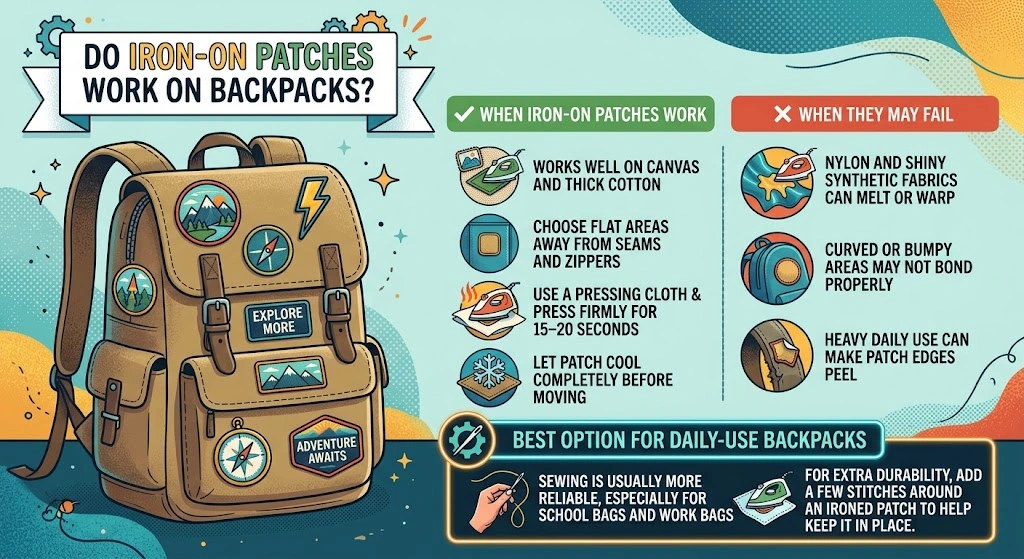
If the backpack fabric is heat safe, like canvas or thick cotton blend, and the patch sits on a flat section away from seams, ironing can genuinely work well. If the bag is nylon, has a bumpy or curved surface where you want the patch, or gets thrown around a lot, ironing alone is a lot less reliable.
For durable patch adhesion on a backpack specifically, most experienced patch users actually recommend sewing instead of relying on the iron alone, or at the very least, reinforcing an ironed patch with a few stitches around the edge afterward.
How to Get the Best Results If You Do Want to Iron It On
If your backpack fabric can safely handle heat, here is how to give the patch its best shot at lasting.
1. Check the Fabric First
If it is heat safe cotton or canvas, you are in decent shape. If it is nylon or a shiny synthetic material, proceed carefully or skip ironing altogether.
2. Pick a Flat Spot
Avoid zippers, seams, and curved pocket edges. A flat front panel works best.
3. Use a Pressing Cloth
Place a thin cotton cloth over the patch before applying the iron, since this protects the material underneath and helps spread the heat more evenly.
4. Press Firmly and Hold
Fifteen to twenty seconds of firm, steady pressure usually does more good than a quick pass with the iron.
5. Let It Cool Completely
Do not touch or move the patch until it has fully cooled, since the bond is still setting during this time.
6. Add a Few Stitches for Extra Hold
Even four or five stitches around the corners can massively extend how long the patch actually stays put on a bag that sees daily use.
What About Sewing Instead From the Start?
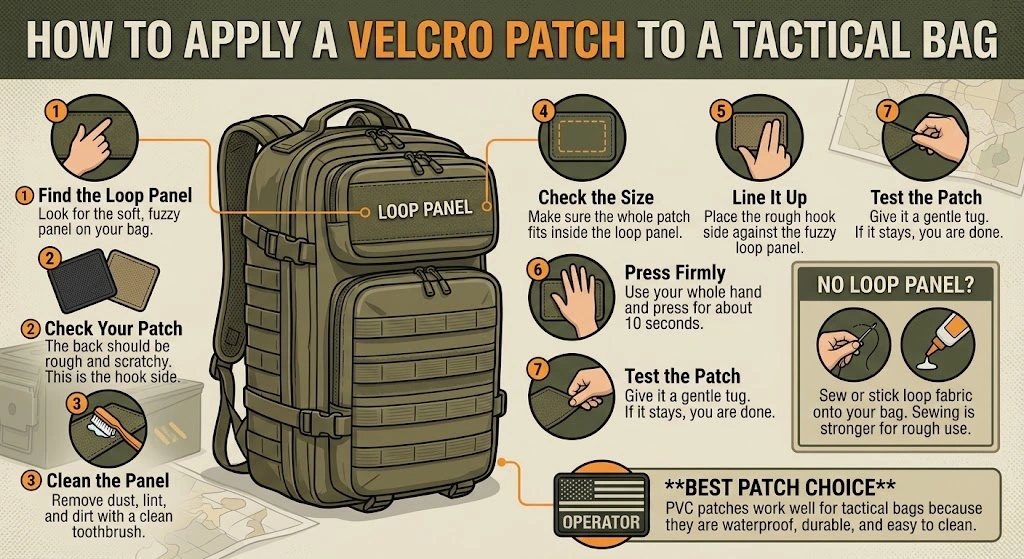
If your backpack fabric cannot safely take heat, or the bag is going to see heavy daily use, like a school bag or a work bag, sewing tends to be the more reliable choice from the beginning. It skips the heat problem entirely and holds up much better through the kind of rough handling backpacks usually go through.
Some people like to start with an embroidered patch for this exact reason, since these are designed to be sewn on and tend to survive daily wear far better than a purely iron-on design.
What If You Already Have a Design You Want Made?
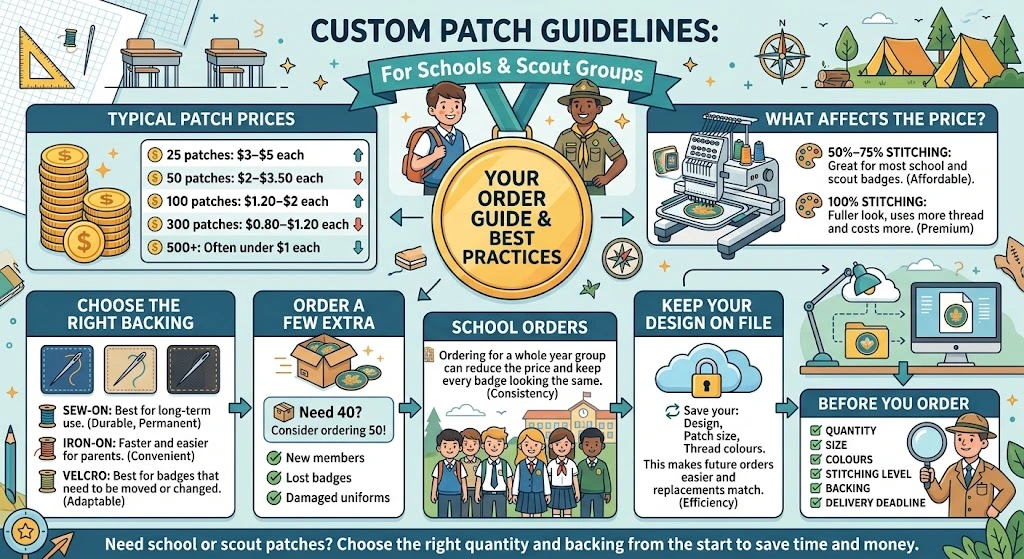
If you have a logo or design in mind and want it turned into something that can actually survive backpack life, it helps to start with the right patch type from the beginning rather than trying to fix adhesion problems after the fact. Browsing through custom patches options before ordering is worth doing, since you can pick a material and backing type suited to how the bag will actually be used.
Frequently Asked Questions
Why Did My Iron-On Patch Fall Off My Backpack So Fast?
This usually comes down to fabric type, patch placement near a seam, or not enough heat and pressure during application. Nylon bags are the most common culprit.
Can I Fix a Backpack Patch That Already Fell Off?
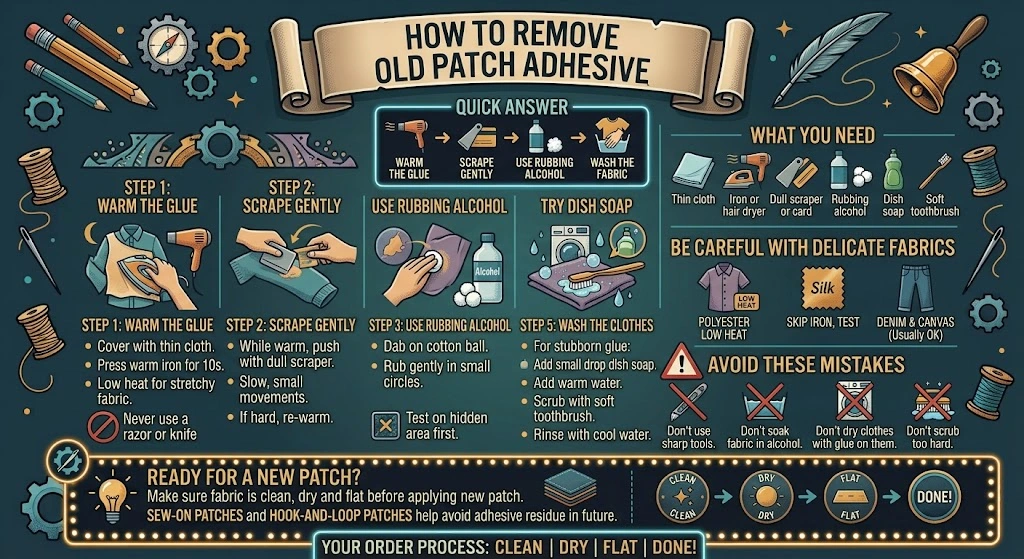
Yes, in most cases. Clean off any old glue residue first, then either re-iron it on a flat section or switch to sewing it on instead for a stronger hold.
Is Sewing Really Better Than Ironing for Backpacks?
For anything that gets heavy daily use, generally yes. Sewing avoids the heat and fabric issues entirely and holds up better under constant movement.
Can Iron-On Patches Work on a Nylon Backpack at All?
Sometimes, at a lower heat setting and with a pressing cloth, but results are less reliable. Sewing is usually the safer route for nylon specifically.
Do I Need Special Glue or Backing for a Backpack Patch to Last?
Not necessarily special glue, but a few reinforcing stitches around an ironed patch make a big difference in how long it actually stays on.
Want a Patch Built for Backpack Life From the Start?
If you are in Chicago or anywhere else in the country, StitchKrafts USA can help you order a patch made with the right backing for how your bag actually gets used, whether that means sew-on, iron-on, or something reinforced for daily wear. Already have artwork ready? We can turn it into a patch built to last well past the first term of school or the first few months on the job.