

How to Attach a Patch to a Leather Jacket the Right Way
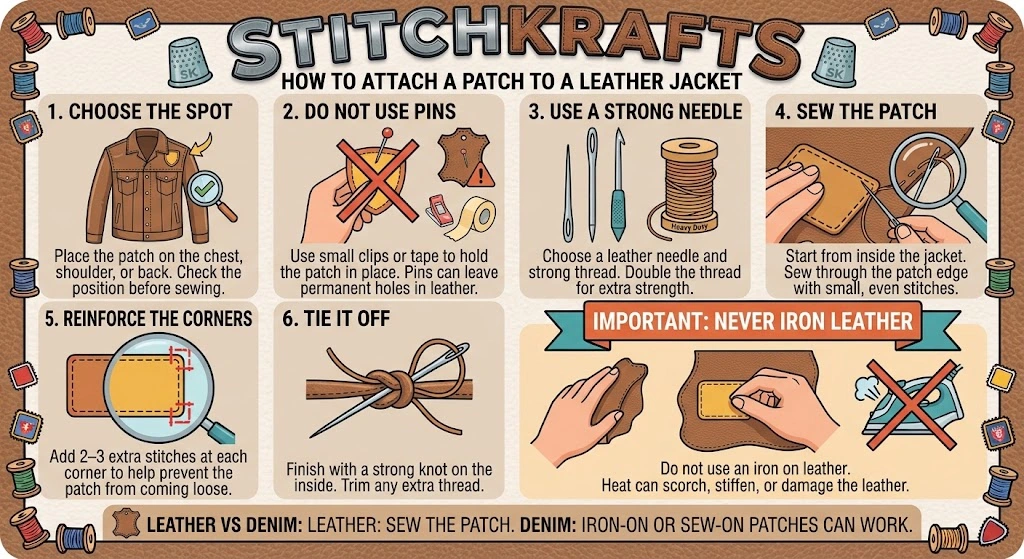
Quick answer: Sew the patch on. Do not use an iron on leather. Leather does not like heat the way other fabric does. Use clips or tape to hold the patch, not pins. Then sew it on slowly with a strong needle.
Leather jackets and denim jackets are not the same. They need different care. Let's go through both, so you know exactly what to do.
Why Leather Is Different
Leather does not stretch. It does not breathe like fabric does. And it really does not like heat pressed on it for a long time. An iron can scorch it, make it stiff, or even melt the surface a little.
This is why we sew patches onto leather instead of ironing them. Ironing works great on denim and cotton. It just does not work on leather. If you have ever tried it and ended up with a shiny, stiff spot, now you know why that happened. If you are starting from scratch and still deciding what to order, custom leather patches are made to handle sewing well, with a sturdy edge that holds stitches nicely.
What You Need Before You Start
You will need a strong needle made for leather. A regular needle can get stuck and struggle to push through. You will also need strong thread, doubled up for extra strength. Grab some small clips or a bit of tape too, since pins leave tiny holes in leather that never go away. And of course, you will need your patch.
Step 1: Pick Where the Patch Goes
Think about this first. The chest, the shoulder, or the back are all common spots. Lay the patch on the jacket without sewing it yet. Step back and look at it. It is much easier to move it now than after it is already sewn on.
Step 2: Hold It in Place Without Pins
This part matters a lot. Do not use pins on leather. Use small clips around the edges instead, or a strip of tape. Both will hold the patch steady while you sew, without leaving any marks behind.
Step 3: Start Sewing
Double up your thread so it is extra strong. Tie a knot at the end.
Start from the inside of the jacket. Push your needle up through the edge of the patch. Then push it back down through the leather right next to it. Keep going slowly, all the way around the patch.
Keep your stitches small and even, about the same size the whole way around. Leather does not stretch, so any mistakes show up more than they would on soft fabric. Take your time here.
Step 4: Add Extra Stitches at the Corners
Corners get pulled the most, especially on a jacket you wear a lot. Once you have gone all the way around, add two or three extra stitches at each corner. This helps the patch stay put for longer.
Step 5: Finish With a Strong Knot
Tie your thread off on the inside of the jacket, not the outside. Trim any extra thread close to the knot. A loose thread can catch on something and start to come undone.
What if It Is a Denim Jacket Instead?
This is where things change a lot. If you want to iron a patch on a denim jacket, it is actually pretty quick, and heat is a good thing here, not a bad one.
Place the patch where you want it. Put a thin cloth over it to protect the denim. Press a hot iron down firmly for about 20 to 30 seconds. Then flip the jacket inside out and press again from the back. Let it cool all the way down before wearing it.
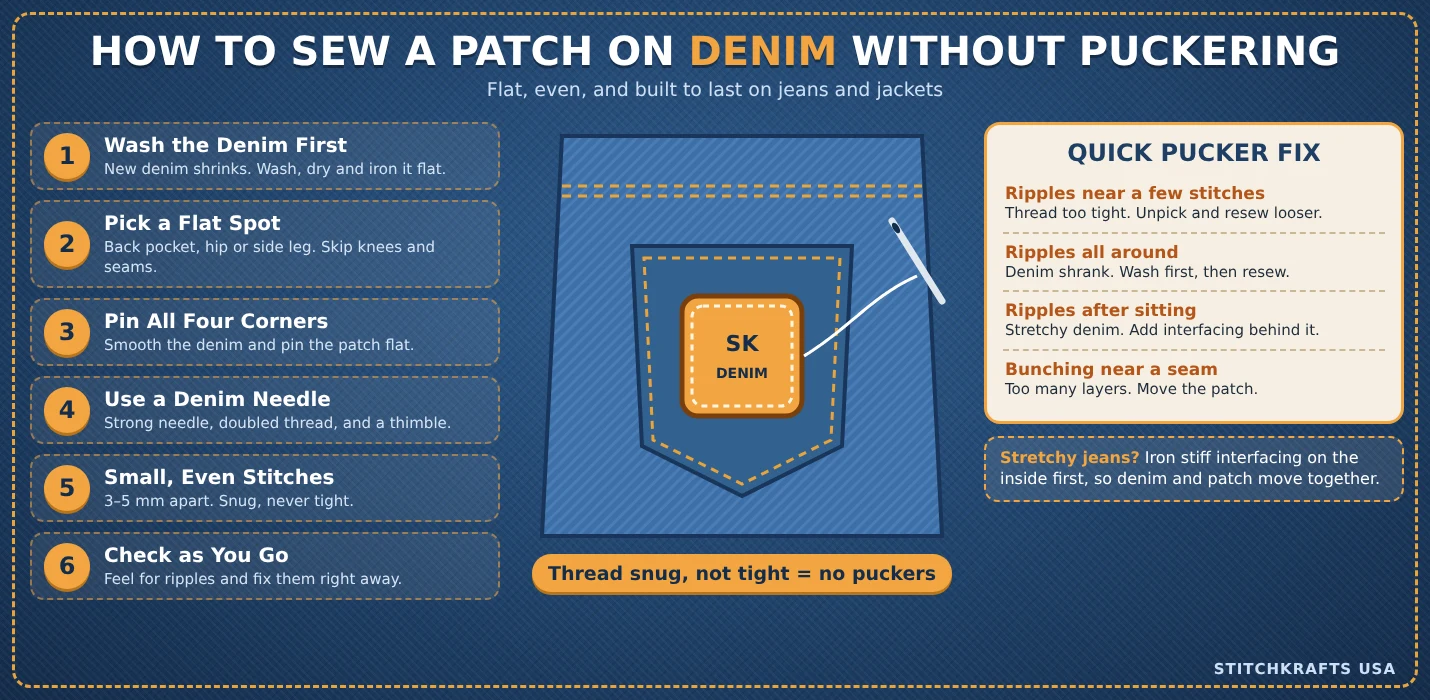
Denim can handle heat that leather simply cannot. That is the whole reason these two materials need two totally different methods. Many people choose embroidered patches for denim jackets specifically, since the raised stitched look holds up beautifully through ironing and washing alike. If you want your denim patch to last even longer, adding a few stitches around the edge after ironing helps a lot, especially if the jacket gets washed often.
Sew-On or Iron-On, Which Should You Pick?
This is worth thinking about before you even get your patch made.
If your jacket is leather, sewing is really your only choice. If your jacket is denim or another tough fabric, either one works, though sewing usually lasts longer through lots of washing.
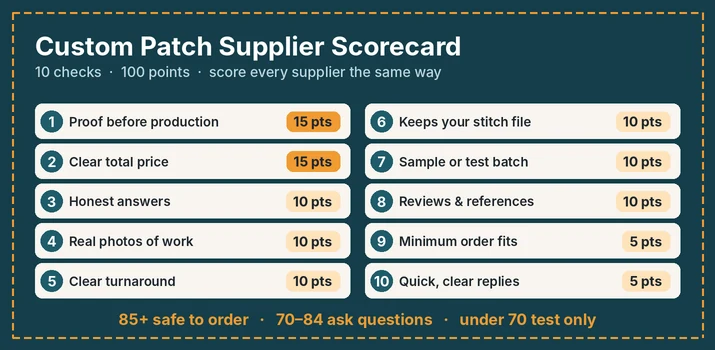
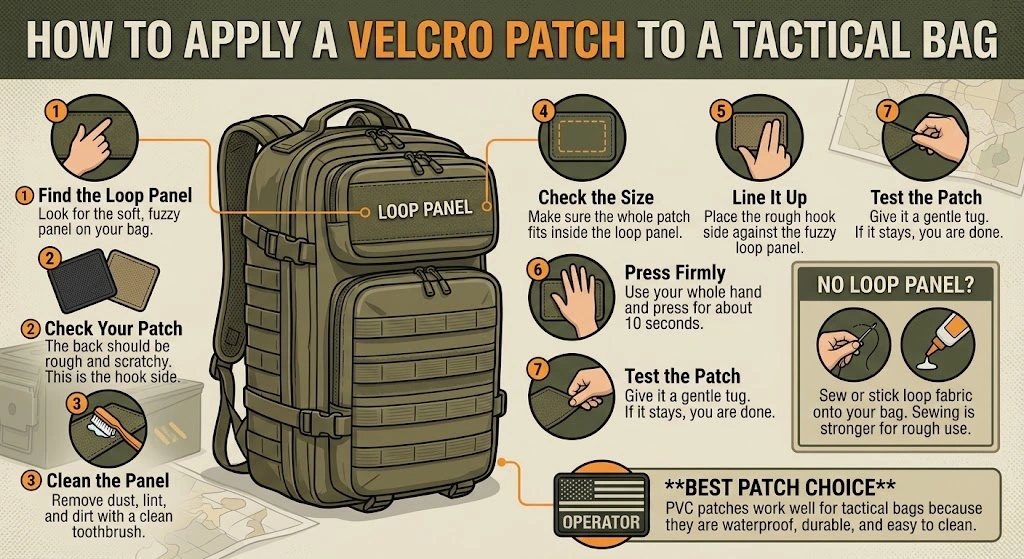
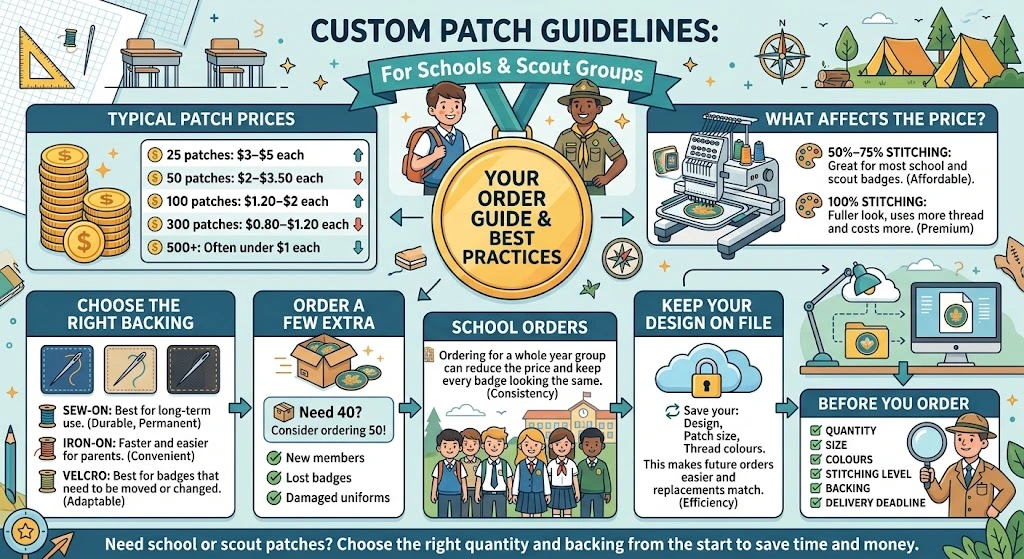
If you like to switch patches in and out sometimes, you can also get leather patches made with a special backing that skips sewing altogether. Just decide on this before your patch is made, not after. This is a great question to raise when you order, so your custom patches come with exactly the backing you need from the start.
Mistakes to Watch Out For
Using pins on leather is a big one, since those holes stick around forever. Rushing your stitches is another, since uneven stitches show up much more on leather than on fabric. Trying to iron a patch onto leather, hoping it works like denim, almost always ends badly. And skipping the extra corner stitches is a small thing that quietly makes your patch fall off sooner than it should.
If Your Design Still Needs Some Work
Sometimes the patch design itself needs a little help before it is ready to be made. If your logo or artwork is not quite clean enough yet, a vector art service can redraw it so it turns out crisp and sharp. Once the artwork is ready, it gets turned into a stitch file through embroidery digitizing, which is the step that actually makes it possible to embroider your design onto a patch in the first place.
Frequently Asked Questions
Can I use a sewing machine on leather instead of sewing by hand?
Some strong machines can handle thin leather, but sewing by hand gives you much more control, especially on a jacket you really care about.
Will sewing leave holes in my leather jacket?
Yes, small needle holes are totally normal, just like any stitched seam. You will barely notice them once the patch is on.
Can embroidered patches be sewn onto leather the same way?
Yes! It does not matter what the patch itself is made from. As long as it has an edge to sew through, the same method works.
Is it ever okay to iron a patch onto leather?
No, not really. Leather can scorch or get stiff under an iron. Sewing is always the safer choice.
How long does a well sewn leather patch usually last?
If it is sewn properly, with even stitches and strong corners, it can easily last for years, even with lots of wear.
Need the Right Patch Before You Start?
Whether you live in New York, Los Angeles, or anywhere else in the country, StitchKrafts USA can help you order leather patches built tough enough for real everyday wear, or something suited to a denim jacket instead. If you already have your own design in mind, we can turn it into a patch made in your exact size, shape, and color.