

How to Clean Embroidered Patches Without Damaging the Threads
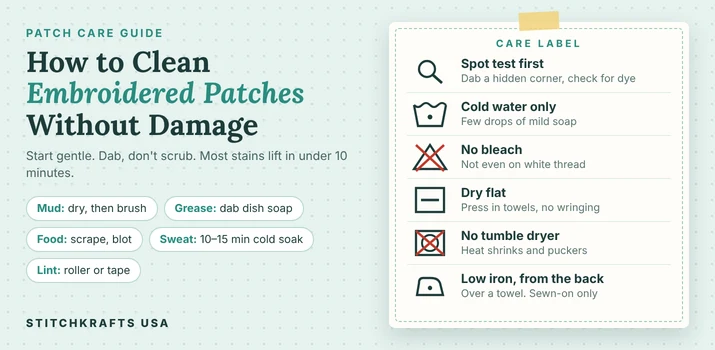
Quick answer: Use cold water, a tiny amount of mild soap, and a soft cloth or toothbrush. Dab the dirty spot. Do not scrub, twist, or use bleach. Let it air dry flat. Most stains come out in under 10 minutes if you start with the gentlest method and only move to a stronger one if you need it.
Embroidered patches are tough, but the thread is still thread. Rubbing hard, hot water, and strong chemicals are what ruin them. Below, you will find a stain by stain cheat sheet, so you can look up your exact problem and fix it fast.
Step 1: Find Out How Your Patch Is Attached
The right cleaning method depends on this, so check first.
- Sewn on. You can see stitches around the edge. These are the easiest to clean, since heat and water do not hurt the attachment.
- Iron on. You see a smooth, shiny layer under the edge. Heat and soaking can soften the glue, so be extra gentle and keep the water cold.
- Velcro. The back feels scratchy. Take the patch off the clothes before you wash anything. The hooks can snag other fabric and clog with lint.
- Loose, not attached. Easiest of all. You can hand wash the patch on its own.
Step 2: Gather a Few Simple Things
You do not need anything fancy. A clean basin or bowl. Cold water. A mild liquid soap, like a gentle dish soap or a delicate wash. A soft cloth. A soft toothbrush. A clean, dry towel. And a lint roller.
Skip bleach, strong stain removers, and anything with a harsh smell. They can fade thread and weaken the fabric.
Step 3: Test Before You Treat
Pick a hidden spot, like the back edge or a corner. Dab a tiny bit of soapy water on it, and press with a white cloth. If color comes off on the cloth, stop. That means the dye can run, and you should use only cold water and very little soap.
This takes one minute, and it can save a patch.
Stain by Stain Cheat Sheet
Find your stain in the table, then follow the matching fix.
| Stain | What to Do |
|---|---|
| Dry mud or dust | Let it dry fully. Brush it off gently with a soft toothbrush, working along the stitches. Then wipe with a damp cloth. |
| Wet mud | Do not rub it in. Let it dry first, then brush. Wiping wet mud pushes it deeper. |
| Grease or oil | Put a tiny drop of dish soap on a cloth. Dab, do not rub. Rinse with a clean damp cloth. |
| Food or sauce | Scrape off any lumps with a spoon edge. Blot with a damp cloth. Dab with soapy water if a mark remains. |
| Coffee, tea, or juice | Blot with cold water right away. Then dab with a little mild soap. |
| Sweat or smell | Soak the item in cold water with a little mild soap for 10 to 15 minutes. Rinse and air dry. |
| Sunscreen or lotion | Dab with a drop of dish soap on a damp cloth. Rinse well. |
| Ink or marker | Test a hidden spot first. This one can spread, so if the patch matters, ask a cleaner or a pro. |
| Pet hair and lint | Use a lint roller or a piece of tape. Press and lift. |
| White thread turning gray or yellow | A gentle soak in cold water with mild soap. Do not use bleach. |
When in doubt, start with plain cold water on a damp cloth. It fixes more than you would expect.
Step 4: The Gentle Wash Method
If the whole patch is dirty, follow these steps.
- Fill a basin with cold water. Add a few drops of mild soap, and swish.
- Place the patch, or the patched part of the garment, in the water.
- Press gently with your palm. Do not rub the stitches against each other.
- Leave it for 5 to 10 minutes.
- For stubborn spots, brush lightly with a soft toothbrush, along the direction of the stitches.
- Drain the soapy water. Refill with clean cold water, and rinse until no soap is left.
Do this on the garment itself for sewn on patches. For loose patches, wash them alone.
Step 5: Dry It the Right Way
Drying is where many patches get hurt. Follow these rules.
Press the patch between two clean towels to soak up water. Do not wring or twist it. Lay it flat to air dry, away from direct sun and heat. Direct sun can fade colors, and heat can warp the shape.
Never use a hot dryer. Heat can shrink fabric, soften iron on glue, and make the stitches pucker.
Step 6: Fix a Flat or Crumpled Patch
After drying, raised stitching can look a little flat. Here is a simple trick.
For a sewn on patch, turn the garment inside out. Place a thick towel under the patch area. Press lightly from the back with a warm, not hot, iron. The towel lets the raised stitches stay puffy instead of getting squashed.
For an iron on patch, skip the iron. The heat can loosen the glue. Instead, gently brush the stitches with a soft brush to lift them.
Can You Use the Washing Machine?
Sometimes. If the patch is sewn on firmly and the clothes are washable, a machine can work. Do these things.
Turn the clothes inside out. Use a mesh laundry bag. Choose cold water and the gentle cycle. Use a small amount of mild soap. And skip the dryer.
For iron on patches, machine washing is riskier, since agitation and hot water can lift the edges. Hand washing is safer.
What Ruins the Threads (and What Does Not)
Three things cause most damage.

- Scrubbing. Rubbing hard pulls threads loose and makes them fuzzy. Dab and press instead.
- Heat. Hot water, hot dryers, and hot irons can shrink, warp, and fade.
- Harsh chemicals. Bleach and strong stain removers can fade thread and weaken it.
Cold water, mild soap, and a gentle touch are almost never a problem.
How Often Should You Clean a Patch?
Less than you think. Washing wears thread over time, so clean only when it is dirty. For light dust, a lint roller or a quick brush is enough. For a patch that gets washed often, check the edges now and then, and add a stitch if a corner starts to lift.
Want a Patch That Is Easier to Keep Clean?
If your patch lives in mud, rain, or grease, consider a material that wipes clean. Rubbery PVC patches rinse off with water and need almost no care. For uniforms and jackets where a stitched look matters, a well made embroidered patch with a tight border stands up to cleaning much better.
Common Mistakes to Avoid
Scrubbing the stitches. Using hot water. Using bleach, even on white. Wringing the patch. Drying it in the sun or the dryer. Skipping the hidden spot test. Washing a Velcro patch while it is still attached. And rubbing wet mud instead of letting it dry first.
Frequently Asked Questions
Can you wash embroidered patches?
Yes. Use cold water, mild soap, and a gentle touch. Hand washing is safest, and you should let the patch air dry flat.
How do I clean an embroidered patch without damaging it?
Dab the dirty spot with a damp cloth and a drop of mild soap. Do not scrub, twist, or use bleach.
Can embroidered patches go in the washing machine?
Sewn on patches can, on a cold, gentle cycle, with the clothes inside out. Iron on patches are safer to hand wash.
How do I get mud off an embroidered patch?
Let the mud dry completely, brush it off gently with a soft toothbrush, then wipe with a damp cloth.
Can I iron an embroidered patch?
You can press a sewn on patch from the back, over a towel, on low heat. Do not iron an iron on patch, since heat can loosen the glue.
How do I keep white thread from turning yellow?
Wash gently in cold water with mild soap, and avoid bleach. Keep patches out of long, direct sun.
Need a New Patch?
If your old patch is past saving, we can make you a new one. Take a look at our custom patches to see the types, borders, and backings available. StitchKrafts USA works with schools, teams, and businesses in Chicago, Austin, and across the country, and can help you choose a patch that will be easy to care for.