

How to Remove a Sew-On Patch Without Damaging the Fabric
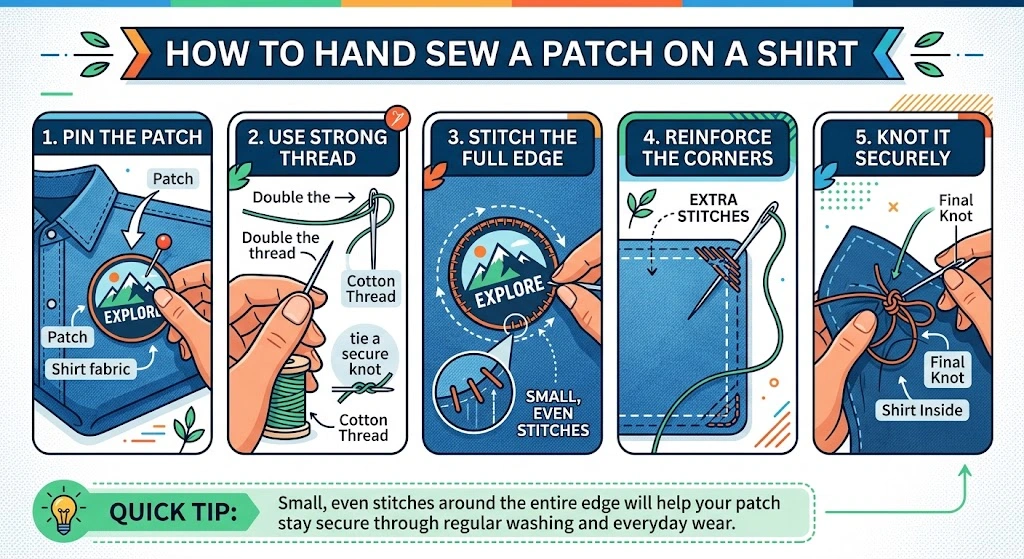
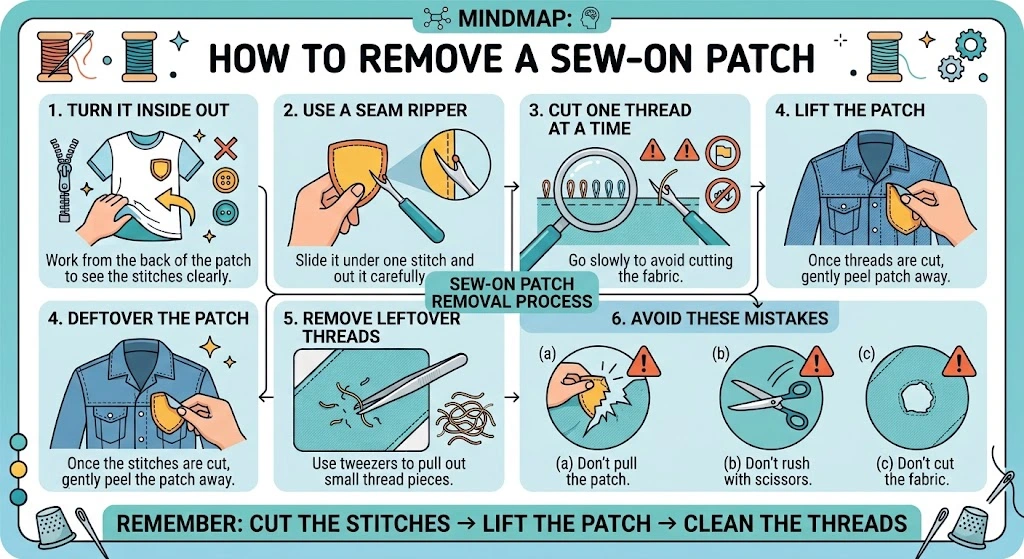
Quick answer: Use a small tool called a seam ripper to snip the little threads on the back of the patch, one at a time. Do not pull the patch off with your hands. Pulling can rip the fabric or leave a hole. Going slow is the big secret here.
Never done this before? That is okay. It is an easy job once you know the steps. Let's go through it together.
What You Need First
You do not need much. Just a few small things.
A seam ripper is best. It is a tiny tool made just for cutting thread. You can find one in most sewing kits.
Small scissors can work too, but you have to be extra careful, since it is easy to snip the fabric by mistake.
Tweezers help you pull out tiny leftover bits of thread.
Good light helps a lot too. Sit near a window or use a lamp, since the threads are small and hard to see in the dark.
Step 1: Turn the Shirt Inside Out
Flip the shirt or jacket so you can see the back of the patch. This is where all the little threads are.
Working from the back is easier. You can see each stitch clearly. It also keeps the front of your shirt safe from scratches.
Step 2: Find One Loose Thread
Look closely along the edge of the patch. Find one little thread that looks loose or sticks out a bit. This is the easiest place to start.
Slide the tip of your seam ripper gently under that one thread.
Step 3: Cut Each Thread Slowly
This step takes a little patience, but it is not hard.
Slide the seam ripper under one stitch. Cut it. Then move to the next one. Do this all the way around the patch.
Do not rush. Do not try to cut many threads at once. Going slow, one thread at a time, keeps the fabric safe.
If a thread will not cut easily, do not pull hard on it. Just skip it and come back later.
Step 4: Lift the Patch Off Gently
Once most of the threads are cut, the patch should start to come loose on its own. Peel it back slowly with your fingers.
If one part is still stuck, stop. Do not pull. Look for a thread you missed in that spot instead.
Step 5: Clean Up the Leftover Threads
After the patch is off, you will see tiny bits of thread still stuck in the fabric. Use your tweezers to gently pull these out, one at a time.
Go slow here too. If you rush, you could stretch the little holes left behind.
Will There Be Holes Left Behind?
Yes, but do not worry. This is totally normal.
Sewing always leaves tiny holes where the needle went through the fabric. Most of the time, these holes are so small you will barely notice them.
If you can still see them a little, try pressing a warm iron over the spot. This helps the fabric fibres settle back down. Thick fabric, like denim, shows holes even less, since it is stronger.
Not All Patches Come Off the Same Way
Some Custom patches are sewn on with thread, like the one we just talked about. You remove these with a seam ripper.
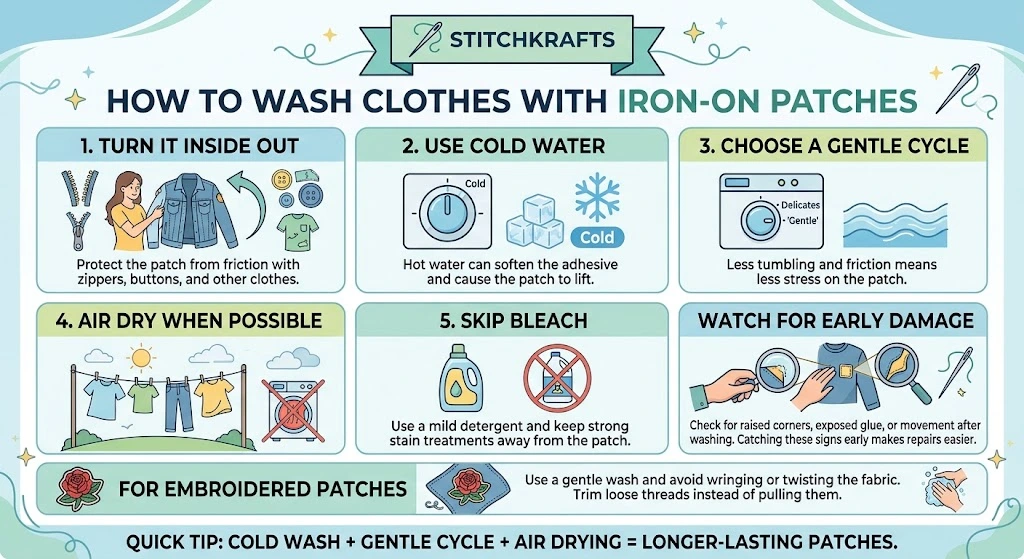
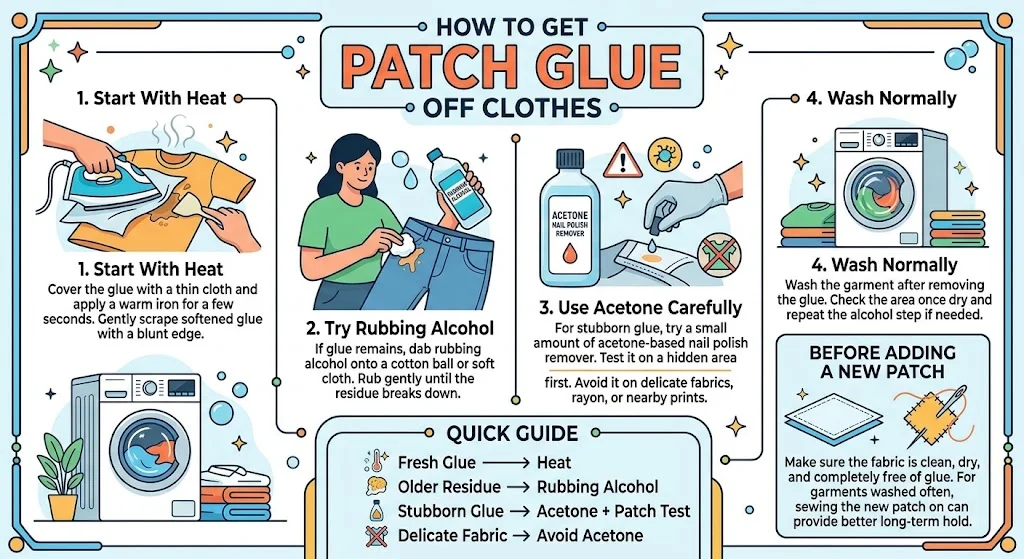
Some patches are stuck on with glue instead of thread. These are called iron-on patches. You need heat, not a seam ripper, to take these off.
Some patches use Velcro. These are the easiest of all. You just peel them apart. No tools needed.
Before you start, check the back of your patch. This tells you which steps to follow.
What If Your Patch Is Peeling, Not Sewn On?
Maybe your patch is not sewn on at all. Maybe it is an iron-on patch, and it is starting to peel up at the edges. That is a totally different, easier fix.
Just put a thin cloth over the patch. Press a warm iron on top for a few seconds. This softens the glue underneath. Then press down firmly and hold it there a little longer to help it stick again.
If it still will not stay stuck, the glue might be too old and worn out. At that point, it is easier to take the whole patch off using heat and start over with a brand new one.
Mistakes to Watch Out For
A few small mistakes can make this job much harder than it needs to be.
Pulling the patch off with your hands, instead of cutting the threads first, is the biggest mistake. This is what usually rips the fabric or leaves a big hole.
Using scissors without care is another mistake. It is easy to snip the fabric by accident if you are not paying close attention.
Rushing near the end is common too. Once the patch is almost off, people get excited and yank the rest of it. This can undo all your careful work.
Frequently Asked Questions
Will Taking Off a Patch Leave Holes in My Clothes?
Just tiny ones from the original stitching. These are normal and are usually barely noticeable, especially on thick fabric.
Can I Take Off a Sew-On Patch Without a Seam Ripper?
Yes. Small, sharp scissors work too. Just go slowly so you do not cut the fabric by mistake.
Is It Safe to Remove a Patch From Leather or Denim?
Yes. Thick fabric like this is actually easier to work with, since it is strong and does not show marks as easily.
What Is Different About Removing a Sew-On Patch Versus an Iron-On Patch?
A sew-on patch needs its threads cut with a seam ripper. An iron-on patch needs heat from an iron to loosen the glue instead.
Can I Put a New Patch in the Same Spot After Taking Off the Old One?
Yes, most of the time. Just make sure all the old thread is gone and the fabric is smooth and flat first.
Ready for a New Patch?
Once the old patch is off, it is the perfect time to try something new. StitchKrafts USA makes custom sew on patches built to last for years, whether you live in Los Angeles, New York, or anywhere else in the country. And if you are dreaming up a brand new design, our custom embroidery digitizing service can turn your artwork into a ready-to-stitch file, so your next patch comes out just the way you imagined it.