


A Comprehensive Guide to Getting the Best Custom Patch: Pro Tips
Most bad patch orders do not fail at the factory. They fail earlier, when the buyer picks the wrong patch type, the wrong size, or a supplier who never sends a proof. This guide walks you through every decision in the order you should make it, so the patches that arrive are the patches you pictured.
Quick Answer
Decide what the patch goes on, then pick the patch type that suits your design, choose a size based on the space you actually have, pick a backing that matches the fabric, and only then compare suppliers. Always ask for a digital proof, ask whether a physical sample is available, and confirm the total price including setup and shipping before you pay.
Step 1: Start With Where the Patch Will Live
Everything else depends on this. A patch for a work shirt that goes through an industrial wash is a different product from a patch for a leather vest or a hiking pack.
- Uniforms and workwear: washed often, so sewn-on patches last longest.
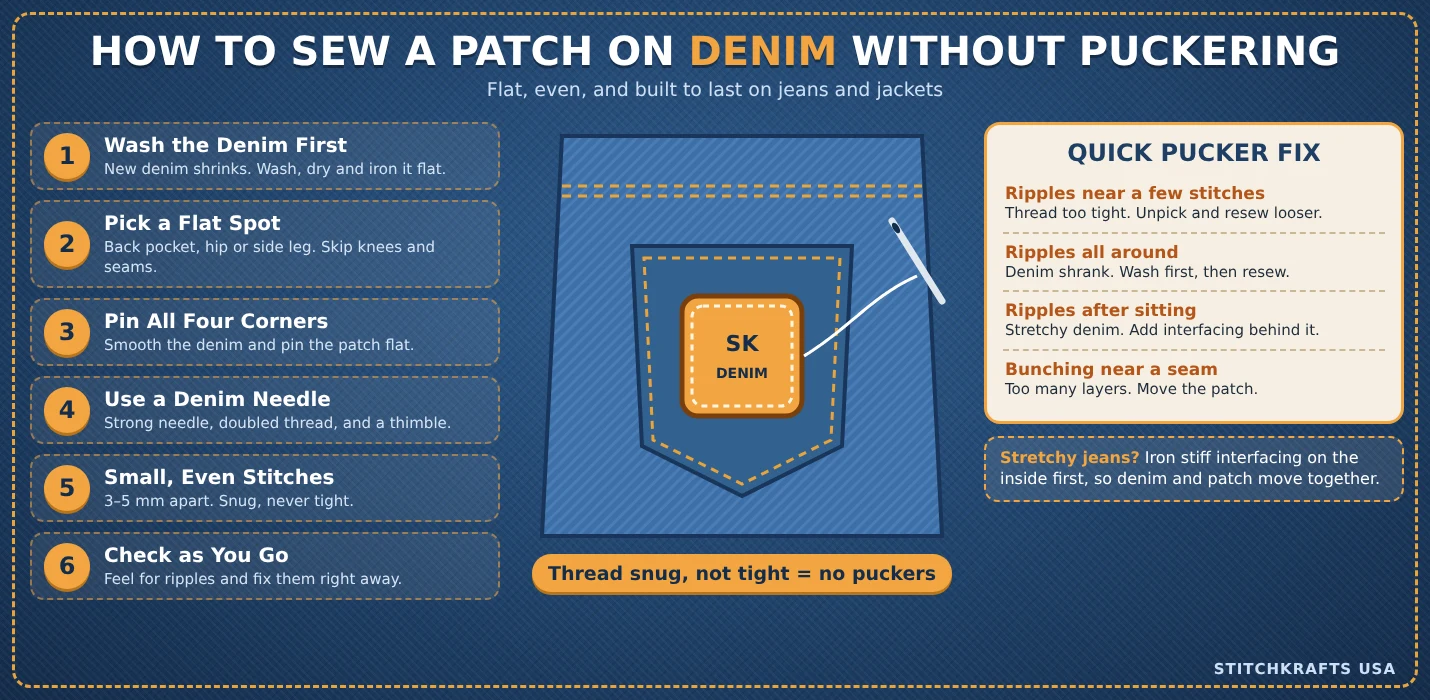
- Jackets and denim: iron-on works for light use, but sewing the border is better.
- Hats: need smaller, lighter patches that can follow a slight curve.
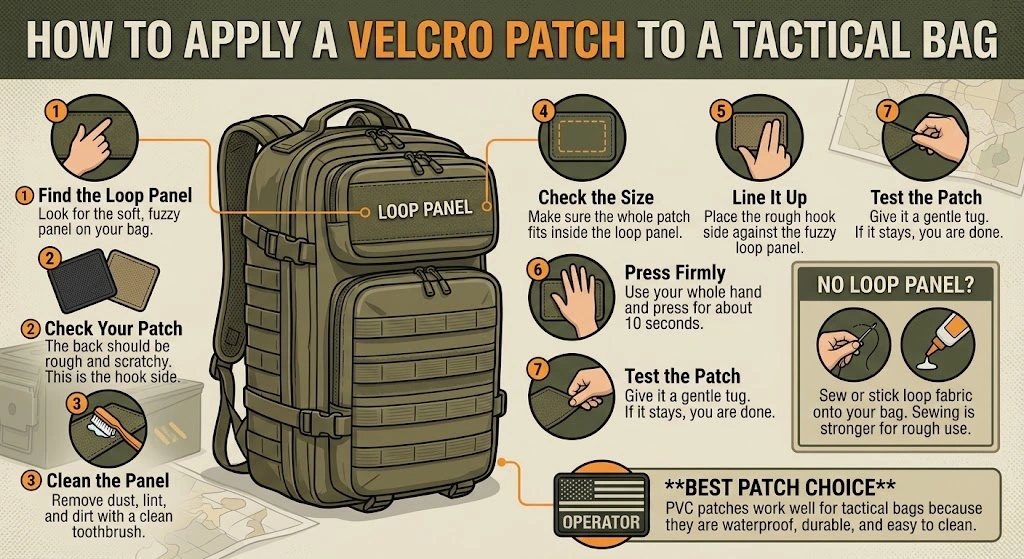
- Bags and outdoor gear: exposed to rain and sun, so PVC or hook and loop backings make sense.
- Leather: sew only. Heat damages leather.
Step 2: Let Your Design Pick the Patch Type
Look at your artwork honestly. The amount of detail decides the patch type far more than personal taste does.
- Embroidered: bold logos, thick lines, solid colors, text at least 6 mm tall. Raised, classic look.
- Woven: fine detail and small text. Flat and sharp.
- Sublimated: photos, gradients and lots of colors.
- PVC: waterproof, 3D, built for outdoor and tactical use.
- Chenille: fluffy varsity look for letterman jackets and school spirit wear.
- Leather: debossed logos for hats, jeans and premium bags.
Not sure? Our guide on how to pick the right patch type breaks this down design by design.
Step 3: Get the Size Right
Size is the decision people regret most. Measure the real space and cut a paper square to that size. Hold it against the garment. A patch that looks big on a screen often looks small on a jacket.
Typical sizes that work:
- Hat front: 2 to 3 inches wide
- Left chest on a shirt: 3 to 3.5 inches
- Shoulder or sleeve: 3 to 4 inches
- Jacket back: 8 to 12 inches
- Backpack front: 3 to 5 inches
Keep in mind that price on most patch types is driven by size, so going up half an inch can change the quote.
Step 4: Choose the Border and Backing
Border: a merrowed border (the thick wrapped edge) suits round, square and simple shapes. A laser-cut or hot-cut border follows complex outlines more closely.
Backing:
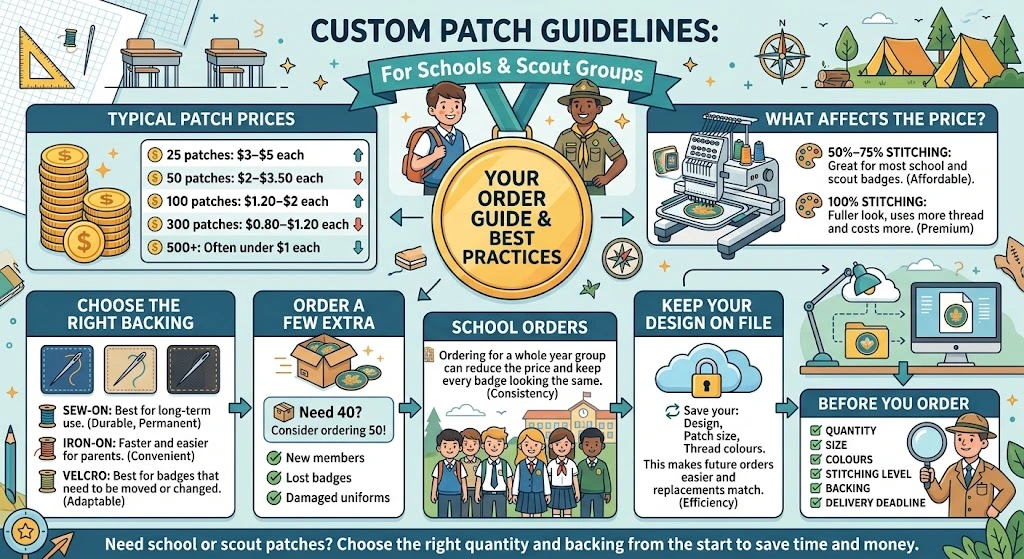
- Sew-on: the strongest hold. Best for anything washed often.
- Iron-on: easy to apply on cotton and denim. Not for nylon, polyester sportswear or leather.
- Hook and loop: removable, ideal for tactical gear and swapping patches.
- Peel-and-stick adhesive: for short-term use like events and trade shows.
Step 5: Prepare Your Artwork
You do not need professional files to start. A sketch, a phone photo or a rough logo is enough for a good supplier to work from. If you do have files, a vector format such as AI, EPS, PDF or SVG gives the cleanest result.
For embroidered patches, your artwork has to be converted into a stitch file before production. This is called embroidery digitizing, and it is what decides how sharp the final patch looks. Ask whether it is included in the price.
Simplify where you can. Remove thin outlines, enlarge small text and limit the color count. Embroidered patches look best with a handful of strong colors.
Step 6: Compare Suppliers With the Right Questions
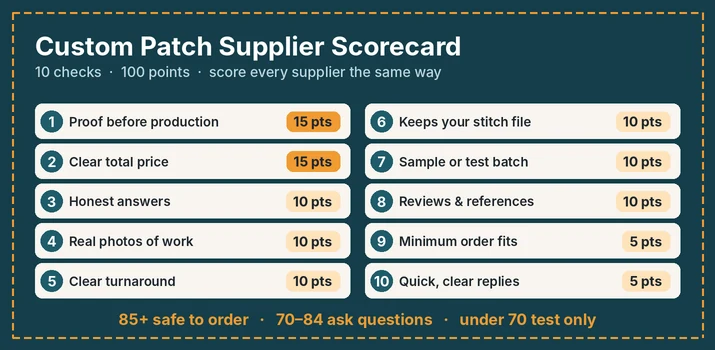
Price per piece only tells part of the story. Ask every supplier the same questions and compare the answers side by side.
- Is there a minimum order quantity?
- Are digitizing, setup and revisions included?
- Will I see a digital proof before production?
- Can I get a physical sample before the full run?
- What is the production time and the shipping time, separately?
- Is shipping included in the quote?
- What happens if the patches do not match the approved proof?
A supplier who answers all of these clearly is usually a supplier who will deliver what they promise.
Step 7: Check the Proof Carefully
When the proof arrives, check it slowly. Read every word for spelling. Check the size in inches. Compare the colors with your brand colors, ideally using Pantone references. Make sure the border color and backing are what you asked for. Changes are free at this stage and expensive after.
Red Flags When Ordering Custom Patches
- No proof before production
- A price that only covers the patches and adds fees at checkout
- No straight answer on turnaround time
- Stock images instead of photos of real past work
- No way to contact a real person
How to Make Your Patches Last
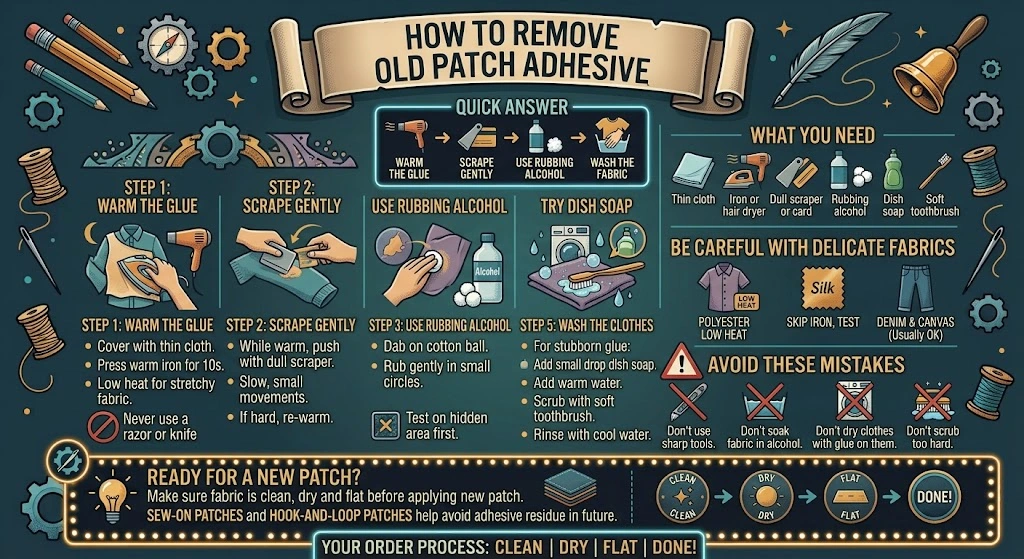
Once your patches arrive, the way you apply them decides how long they stay on. Sew the border on anything that gets washed often, even if the patch has an iron-on backing. Wash garments inside out in cold water and skip high heat in the dryer. For step-by-step help, see our guides on putting a patch on a jacket and washing clothes with iron-on patches.
Frequently Asked Questions
What is the best type of custom patch?
There is no single best type. Embroidered patches suit bold logos, woven patches suit fine detail, PVC suits outdoor gear, and sublimated patches suit photos and gradients. The best patch is the one that matches your design and how it will be used.
What file format do I need for a custom patch?
Vector files (AI, EPS, PDF, SVG) give the cleanest results, but most suppliers can work from a JPG, PNG or even a hand sketch.
How long do custom patches take?
Most orders take around two to three weeks from proof approval to delivery, depending on the patch type, quantity and shipping method. Ask for production and shipping times separately.
Should I choose iron-on or sew-on backing?
Iron-on is convenient for cotton and denim. Sew-on is stronger and works on every fabric. For anything washed often, use iron-on for placement and sew the border for strength.
Can I order a small quantity of custom patches?
Yes. StitchKrafts makes custom patches with no minimum order, so you can order a handful for a personal project or thousands for a uniform program.
Ready to Start?
Work through the steps above and you will know exactly what to ask for. When you are ready, send your design to StitchKrafts custom patches and get a free digital proof before you commit to anything.