

Custom Patches Are the New Personal Brand. Here Is Why America Cannot Stop Ordering Them
In 2026, the most powerful thing you can wear is something nobody else has. Custom embroidered patches are how people are doing it.
Something Changed. And It Changed Fast.
Five years ago, a custom patch order meant a sports team needed numbers on jerseys, or a company needed logos on uniforms. It was functional. It was bulk. It was forgettable.
That is not what is happening anymore.
Today, a teenager in Los Angeles is ordering a single run of patches that reference her grandmother's village in Mexico. A barbershop in Detroit is putting its founding year and neighborhood on staff jackets through a patch that took three weeks to design and two to arrive. A group of eight friends who completed a cross-country road trip together are splitting a batch of fifty patches that mark the route, the dates, and an inside joke that only they understand.
None of these people needed a patch. They wanted one. That distinction is everything.
Hyper-personalisation has arrived in American fashion and it is not leaving. Custom embroidered patches are sitting at the very centre of it. This blog explains why, and what it means if you are thinking about designing one yourself.
Quick Answer
Hyper-personalisation means people want clothing and accessories that reflect their specific identity, not just a brand name or a generic design. Custom embroidered patches are the most accessible and versatile tool for achieving this. They work on any item, they last longer than the garment, they can be moved or replaced, and they communicate something real about who you are or what you have built. StitchKrafts USA produces custom patches from original designs with a physical sample before full production.
What Hyper-Personalisation Actually Is
Personalisation has existed for a long time. Your name on a mug. A monogram on a shirt cuff. A logo on a cap.
Hyper-personalisation is different. It is not just putting your name on something. It is designing something that could only belong to you, or to your specific community, because it carries meaning that a generic product never could.
It is the difference between a patch that says your team name and a patch that captures the specific identity of your team in the specific season that mattered most. It is the difference between a brand logo patch and a patch that tells the story of how the brand started, what it stands for, and where it comes from. It is the difference between something personalised and something personal.
This is what people are ordering now. And the demand is growing faster than at any point in the history of the custom patch industry.
Why Custom Embroidered Patches Are the Tool of Choice
There are many ways to personalise clothing. Screen printing. Direct embroidery. Heat transfer. Sublimation. All of them work. But custom embroidered patches have become the preferred format for hyper-personalisation for reasons that go beyond aesthetics.
They carry physical weight. Pick up a quality custom embroidered patch and you feel something. The density of the thread. The raised texture of the design. The firm edge of the merrowed border. This physical quality communicates craft and intention in a way that a printed sticker or a flat heat transfer does not. When you hand someone a well-made patch, they immediately understand that it is not a mass-produced item, even when it was made to exacting specifications.
They move between items. A patch sewn onto a jacket can be removed and placed on a bag. It can travel from one garment to the next across years and decades. The personalisation is portable. This is fundamentally different from direct embroidery or printing, which is permanently tied to one specific garment.
They outlast the item. Great patches are kept long after the clothing they decorated has worn out. Military patches. Band patches. Travel patches. Championship patches. People save them in boxes, frame them, sew them onto new items. The patch becomes a record of the moment when the garment is gone.
They work on everything. Jackets, bags, hats, sleeves, jeans, hoodies, uniforms, caps, accessories. One custom patch design works across every item category. You do not need a separate production process for each product type.
They are accessible at any scale. This is the point that has changed most dramatically in recent years. You do not need to be a large organisation to order a quality custom embroidered patch. Individuals, small groups, and independent creators can now access the same quality of patch that corporations order in the thousands, at quantities that make sense for their actual needs.
Who Is Driving the Hyper-Personalisation Wave Right Now
The range of people ordering custom patches for personal and small-scale projects in 2026 is broader than it has ever been. These are the groups driving the strongest growth.
Individuals Expressing Identity
This is the fastest-growing segment in the custom patch market and the one most directly driven by hyper-personalisation.
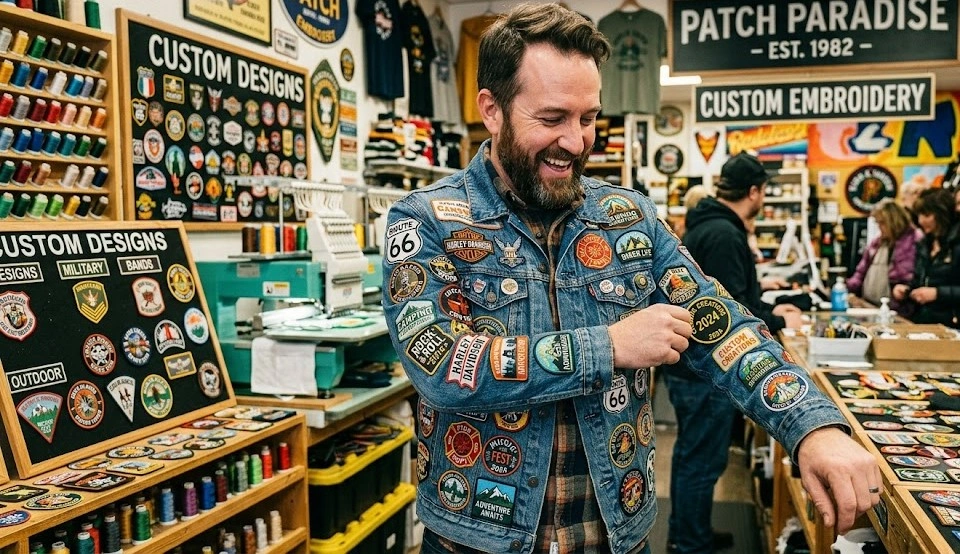
People are designing patches that reference their cultural heritage, their hometown, their creative work, their values, and the communities they belong to. A first-generation American in Miami whose patch honours their family's country of origin. A musician in Nashville whose patch carries the artwork from an album that matters to them. A collector in New York building a jacket that documents a decade of meaningful experiences through patches accumulated over time.
These are not bulk orders. They are personal commissions, small quantities of something designed with real intention. And they are being ordered at a rate that would have been difficult to imagine even five years ago.
Small Businesses Making Branding Feel Human
Independent businesses across the US are using custom patches as a branding tool that communicates craft and authenticity in a way that standard printed merchandise cannot.
A coffee shop in Portland whose staff wear patches instead of name badges. A barbershop in Chicago whose branded patches go on jackets and tote bags sold alongside haircut appointments. A small clothing label in Atlanta whose seasonal patches are included with every order as a collectible extra that customers share on social media.
These businesses are not ordering patches because they need to put a logo somewhere. They are ordering them because a well-made custom embroidered patch communicates something about who they are that a printed tag or a branded tote bag simply does not reach. The physical quality of the patch becomes part of the brand identity itself.
When you order custom patches from a maker like StitchKrafts USA, the standard of production matters for exactly this reason. A patch that feels cheap undermines the brand it represents. A patch that feels considered and well-made reinforces everything the brand is trying to say.
Sports Teams and Youth Clubs
Generic stock patches no longer satisfy teams and clubs that want their specific identity reflected in what they wear. The demand has shifted from standard sports badges to custom designs that capture the particular identity of a particular team in a particular season.
A youth football team in Houston that wants a patch specific to their season. A youth baseball league in Phoenix whose patches mark each division separately. A high school swim team in Miami whose patch design changes every year to mark a new chapter.
These orders are possible at small quantities now. A team of twenty-five does not need to order five hundred patches to get a quality result. The barrier that once made genuinely custom patches inaccessible to small organisations has largely disappeared.
Artists and Creators Selling Patches as Products
Independent designers, illustrators, and artists across the US are building patch lines as a product category in their own right. They design limited runs of patches from their original artwork, sell them through online shops and local markets, and use the patch format to put physical objects behind their creative work.
The patch is both the medium and the product in this format. It is affordable to produce at small quantities, ships easily, photographs well, and has a dedicated collector market that actively seeks well-designed limited-edition pieces.
A patch that sells out creates demand for the next one. This is how several independent patch creators have built sustainable merchandise businesses from artwork that started as a personal creative practice.
The Practical Side. What to Know Before You Design Your Own
If the idea of designing your own custom patch is appealing, here is what to think through before you start.
What Is the Patch Going On?
This shapes almost every other decision. A patch for a cotton denim jacket is different from a patch for a nylon backpack. The backing type, the size, the border style, and the application method are all influenced by the item the patch will live on. Know this before you contact a maker.
What Does the Design Look Like?
You do not need a finished design file. A clear sketch, a reference image, a photograph, or even a written description of what you want is enough to start. The maker handles the artwork conversion through the digitising process.
For embroidered patches specifically, simple and bold reproduces better than complex and fine. Thick lines, solid colour blocks, and lettering at least 6mm tall all come out clean and sharp in embroidery thread. Very fine lines and tiny text are harder for embroidery to capture accurately. If your design has a lot of fine detail, ask your maker whether a woven patch might give a cleaner result.
Not sure whether embroidered is even the right patch type? Our guide on choosing the right patch type matches designs to woven, PVC, chenille and other styles.Which Backing Do You Need?
Iron-on heat seal is the most popular choice for personal projects. It bonds to cotton and denim well and lets you apply the patch with a household iron. For anything that will be washed frequently or worn on synthetic fabric, sewing around the border after ironing gives a significantly stronger long-term hold.
Sew-on backing has no adhesive and is attached purely by stitching. This is the most durable option and the right choice for anything worn daily or washed regularly.
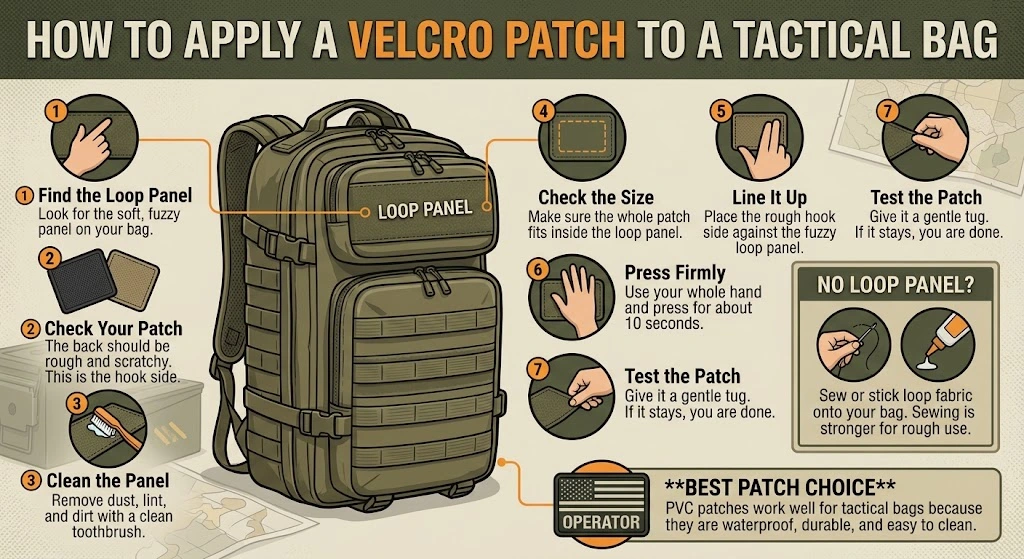
Hook and loop backing makes the patch removable and repositionable. This suits collectors, morale patch applications, and anyone who wants to swap patches between items.
How Big Should It Be?
Measure the area where the patch will sit before deciding on dimensions. A patch that looks right on screen frequently looks too small on the actual item. Most people find their first instinct on size is slightly too conservative. A patch that is slightly larger than you think you need usually looks more intentional than one that looks like an afterthought.
How to Keep Your Iron-On Patch From Falling Off
Once your custom patch arrives, getting the application right is the last step between a great result and a disappointing one.
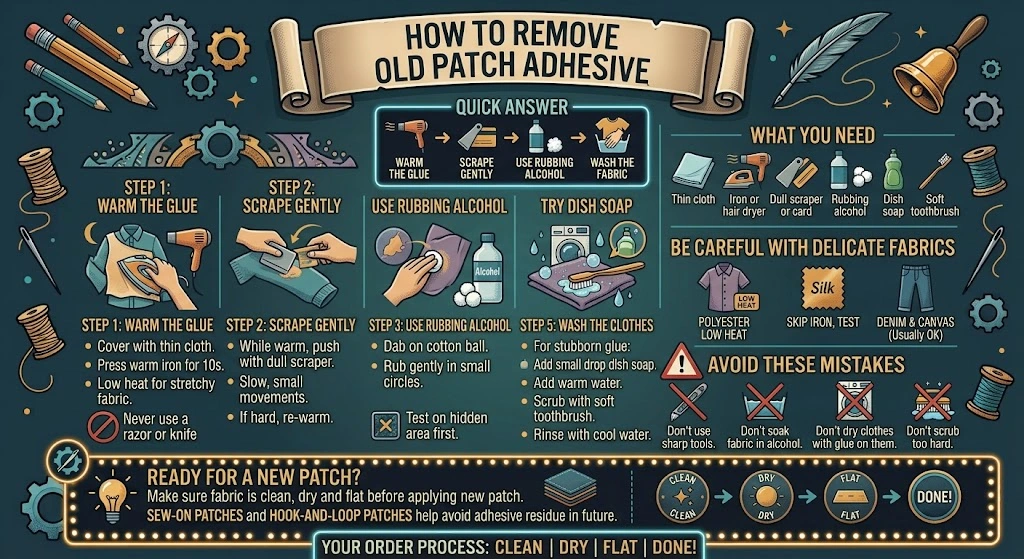
For iron-on patches, the two most common reasons for early peeling are steam being left on during pressing and insufficient press time. The correct method is simple.
Set your iron to maximum heat and turn the steam completely off. Place a thin cotton cloth over the patch. Press straight down with firm pressure for 30 to 45 seconds without sliding the iron. Flip the garment over and press from the back for another 30 to 45 seconds. Leave the item flat for at least 10 minutes before wearing or washing.
For any patch on a sleeve or a bag that will flex regularly, sew around the border after ironing. The iron positions the patch precisely. The stitching holds it permanently. This combination is the professional standard and it works on every fabric type and every placement position.
For step-by-step help, see our guides on putting a patch on a jacket and washing clothes with iron-on patches.The Quality Difference Is Real
When a patch represents something personal, your identity, your brand, your community's shared history, the quality of the patch matters in a way it simply does not for a generic stock badge.
A cheap patch has uneven thread density, inconsistent colour reproduction, and a border that distorts when you try to sew through it. It fades faster. The edges lift after a few washes. The backing adhesive applies unevenly and the corners start peeling before the design has had a chance to mean anything.
A well-made custom embroidered patch has consistent thread density across the full design, clean colour reproduction that matches your original artwork, a firm and even merrowed border, and full-coverage backing adhesive that bonds from edge to edge.
StitchKrafts USA produces custom embroidered patches with the kind of production standard that makes a personal patch worth keeping. Every order includes a physical sample before full production begins. You hold the actual patch in your hands and confirm it matches your intention before a single piece of the full run is made. That process exists because the patches are personal. And personal things deserve to be done right.
Related Guides
- How to pick the right patch type for your design
- How to put a patch on a jacket
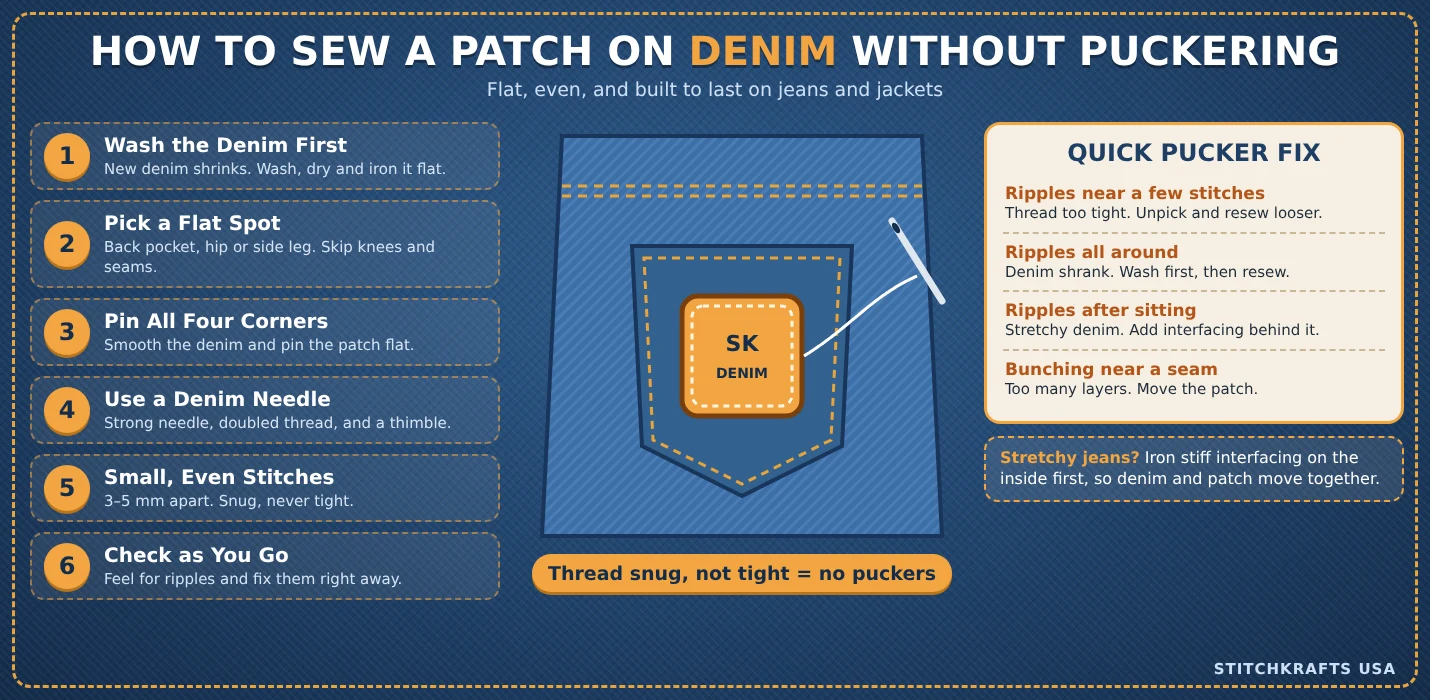
- How to sew a patch on a sleeve
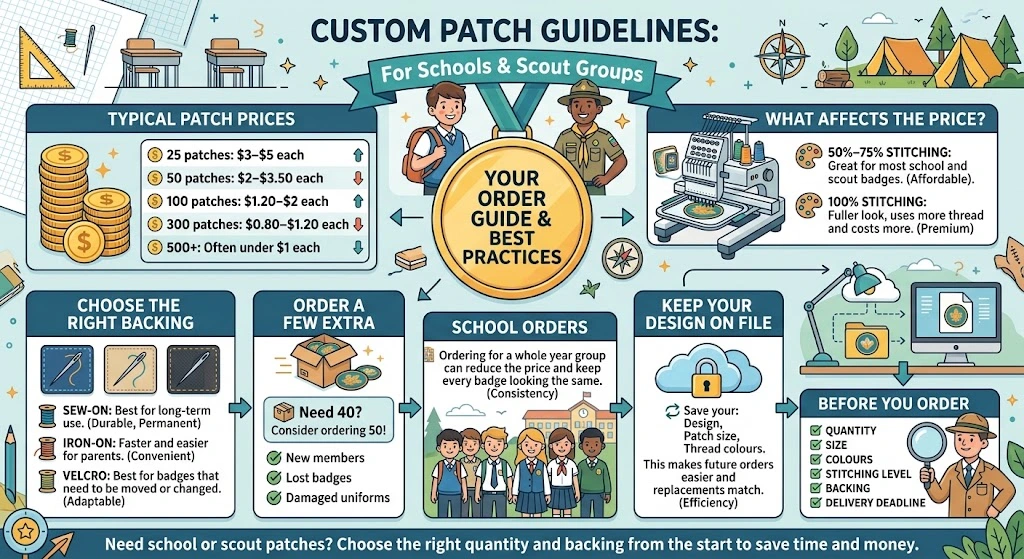
- Custom patches pricing guide for schools and scout groups
Frequently Asked Questions
What is hyper-personalisation in fashion?
Hyper-personalisation means clothing and accessories that reflect your specific identity rather than a generic brand or standard design. In 2026 it is the dominant driver of growth in the custom patch and embroidery industry. People want items that carry real meaning, personal, cultural, community-specific meaning, rather than stock designs that could belong to anyone.
How do I design my own custom embroidered patch?
Start with a clear idea of the design, the item it will go on, and the quantity you need. Contact a custom patch maker with a sketch, reference image, or description. The maker converts your artwork into a production-ready digitised file and provides a physical sample for your approval before making the full order. StitchKrafts USA handles this process from initial design through to delivered patches.
What is the minimum order quantity for custom patches?
Many makers start at 50 pieces for embroidered patches. StitchKrafts USA has no minimum order, so a single patch for a personal project is fine. For small personal or community projects, ask specifically about small-batch options when you make contact.
Can I iron a custom patch onto any fabric?
No. Iron-on patches bond well to cotton and denim. They do not bond reliably to nylon, polyester performance fabric, or waterproof-coated materials. Always check the garment care label before applying heat. For synthetic fabrics, sew the patch on without ironing.
How long does a custom patch order take?
Most orders take two to three weeks from design submission to delivery, depending on complexity and quantity. Rush production is available from most quality makers for time-sensitive projects.
Why does my iron-on patch keep falling off?
The most common causes are steam being left on during application, insufficient press time, synthetic fabric that does not hold adhesive, or washing the item before the adhesive has fully cured. Iron at maximum heat with no steam for 30 to 45 seconds on each side, press from the back, and wait 24 hours before the first wash. Sewing the border after ironing is the most reliable long-term solution for any patch on a moving or frequently washed garment.
One Sentence That Sums It Up
In 2026, the most powerful thing you can put on a jacket, a bag, or a hat is something that could only be yours, and a custom embroidered patch is the cleanest, most lasting way to do exactly that.